漢民科技 Hermes-Epitek 2026 Touch Taiwan
Light Deposition
光的沉積
展覽類設計/ Exhibition design
台北,南港展覽館/ Taipei, Taiwan
主辦單位|漢民科技
策展單位|嶼人設計工作室
空間設計|曾雅欣、林中一 、王俞驊
設計助理|李偲妤
工務統籌|雲門工程
玻璃原料|春池玻璃
版面印刷|勝陽國際有限公司
設備協力|黑金剛廣告股份有限公司
展場攝影|王俞驊、李偲妤
特別感謝|光宇應用材料股份有限公司
2026 eTouch Green Decoration - Diamond Award
2026 etouch綠色裝潢設計獎 - 鑽質獎
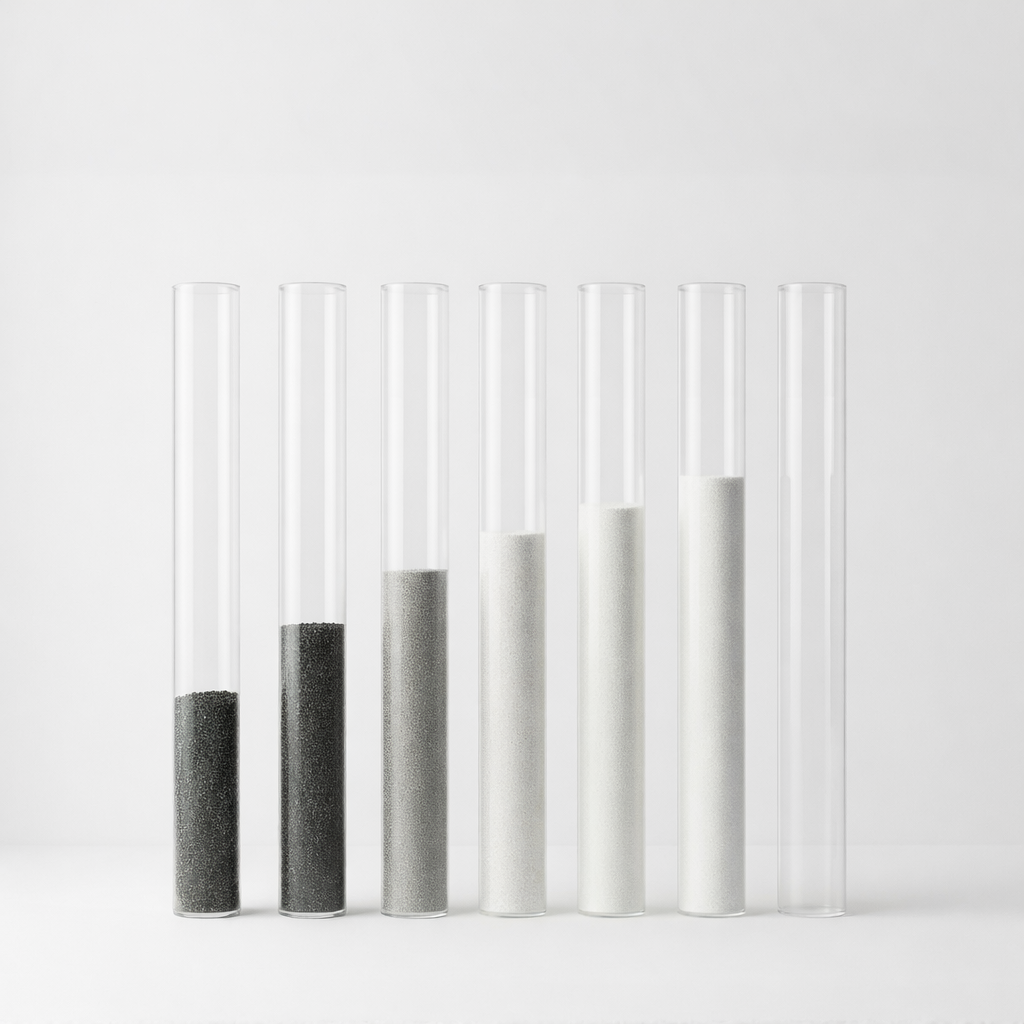
From Matter to Limitless Possibilities
從基礎物質出發,開展未來技術的無限想像
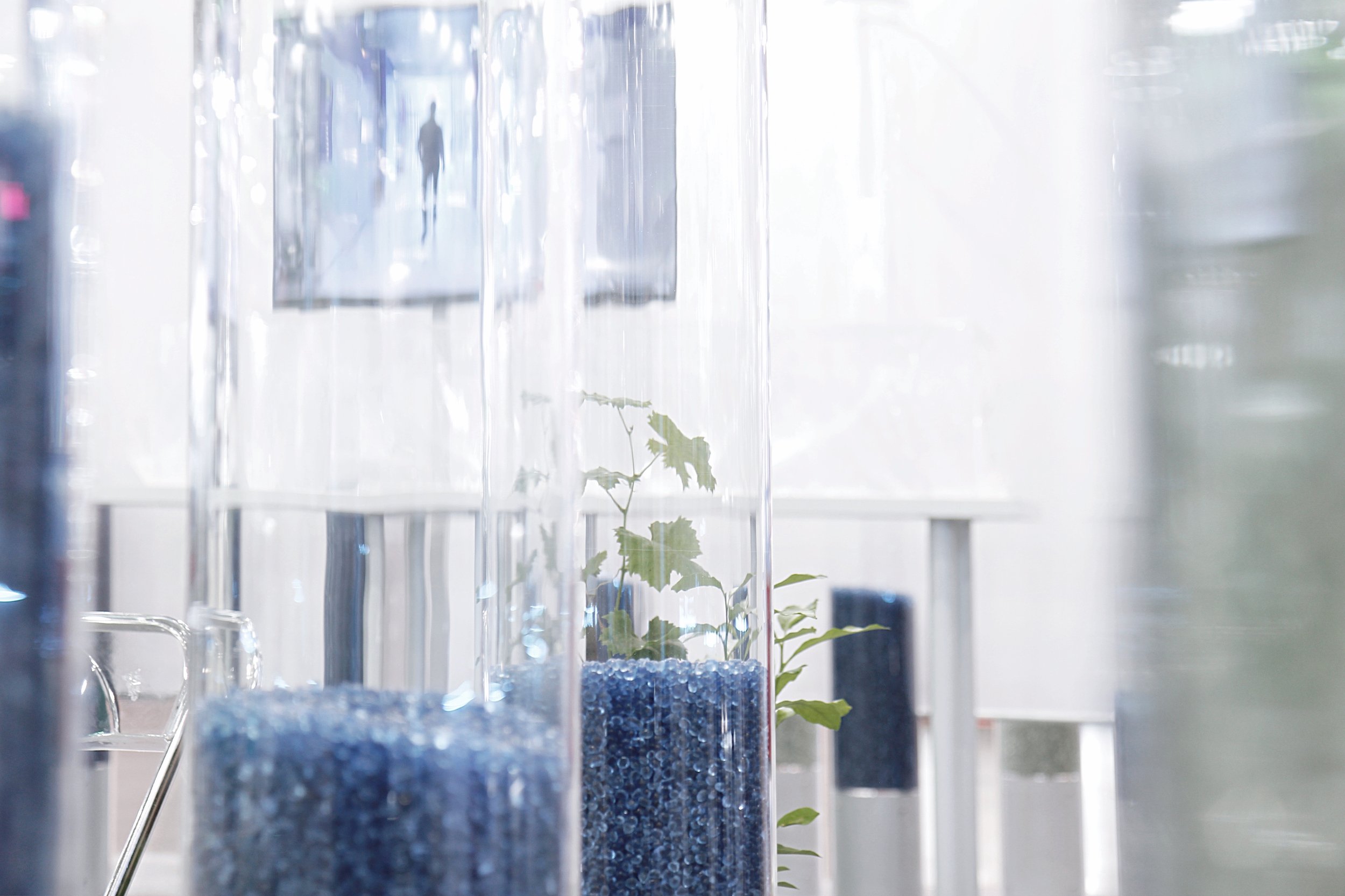
Depositing Light is the exhibition design for Hermes-Epitek at Touch Taiwan 2026.
The design begins from the identity of Hermes-Epitek. Precision manufacturing, material circulation, and care for the working environment are expressed through material, light, and plants.
The main idea comes from two movements of material. In manufacturing, material is processed and deposited layer by layer, becoming a high-tech product. In recycling, waste and sludge are treated and purified, returning to a cleaner state.
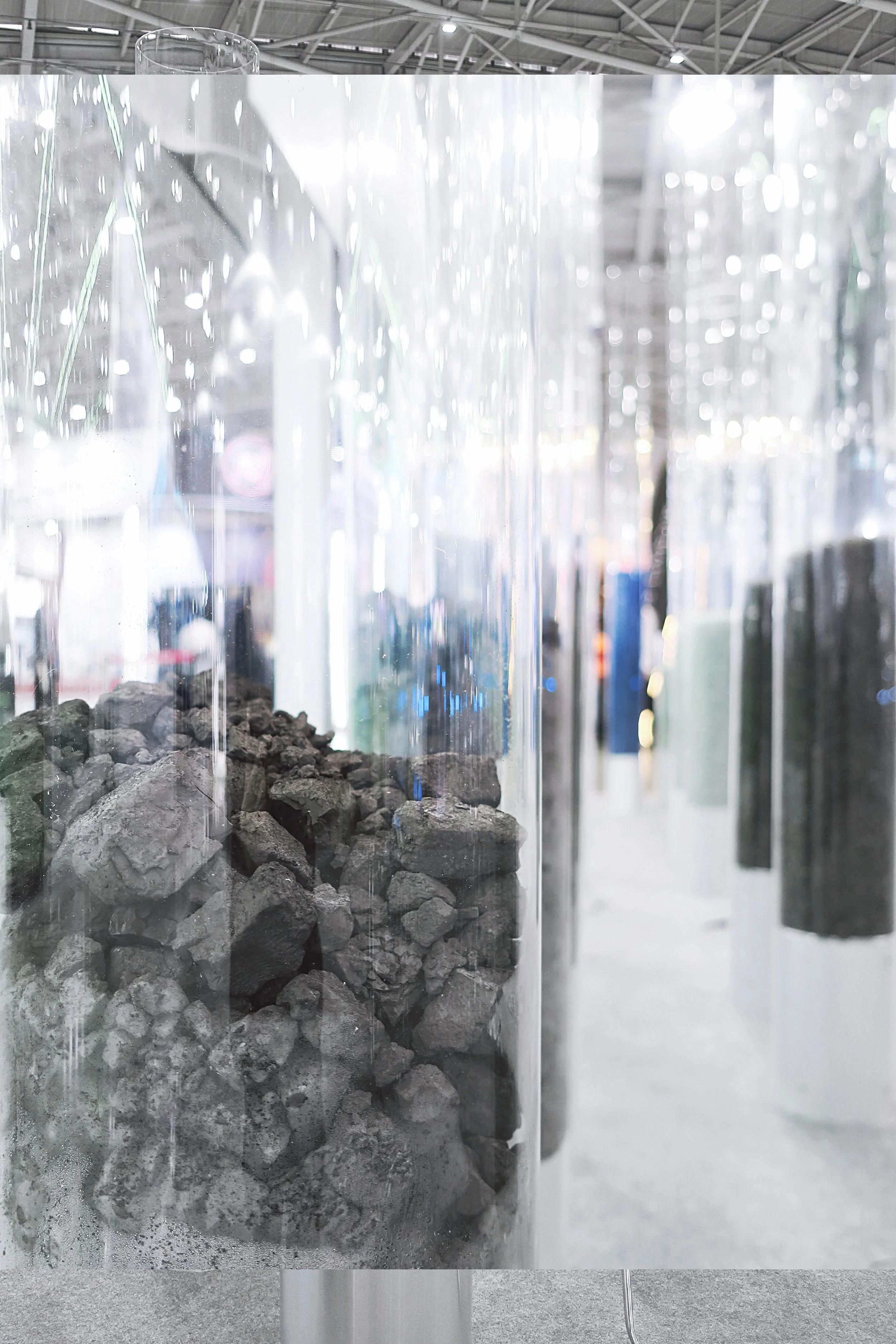
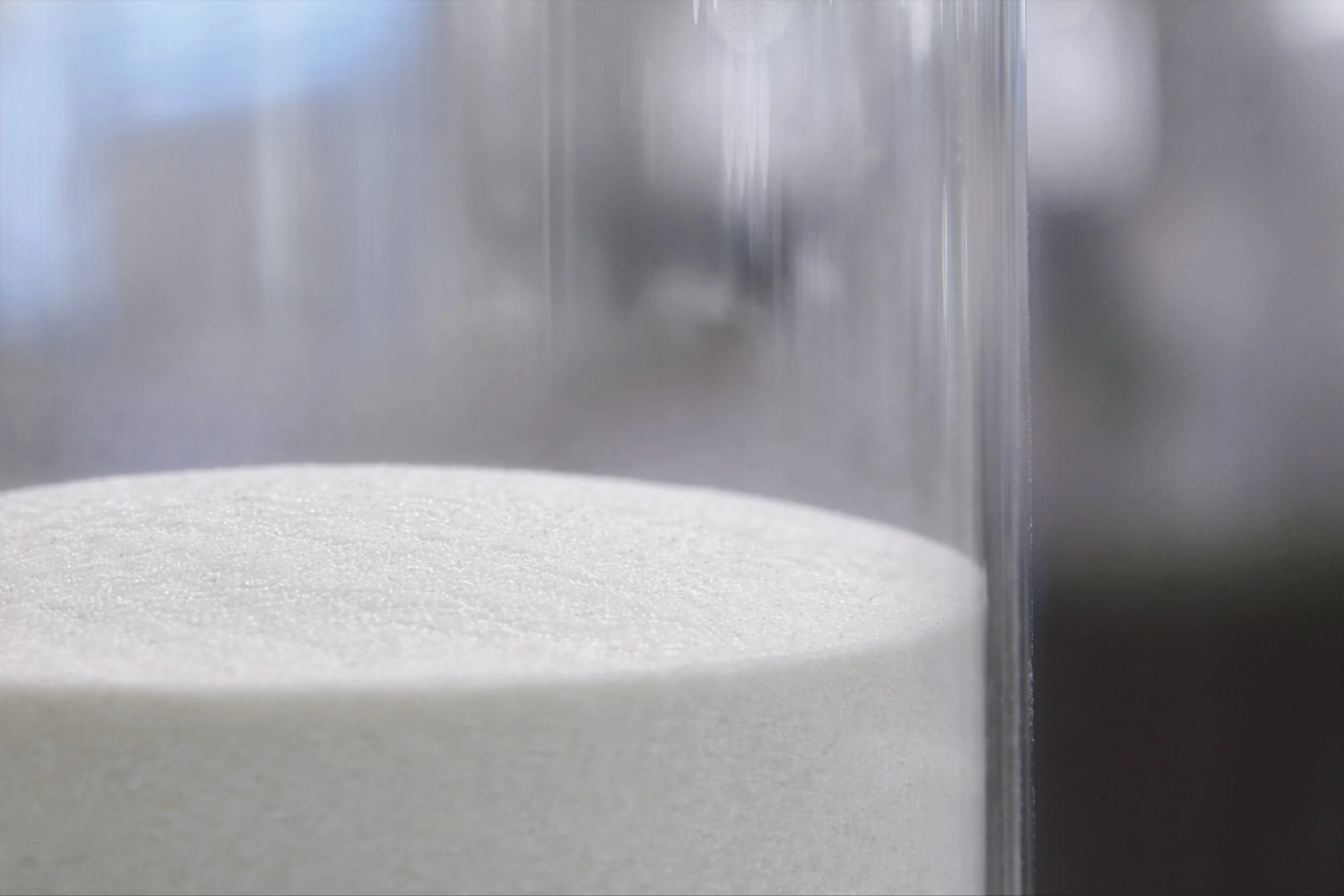
Glass represents the process of deposition. Sludge blocks and silicon dioxide, provided by a recycling partner of Hermes-Epitek, are also placed directly in the exhibition.
光的沉積 是Hermes-Epitek漢民科技 2026 Touch Taiwan 的展場設計。
從漢民的企業形象出發,將精密製程、材料循環,以及對工作與生活環境的重視,轉化為展場中的材料、光線與植栽。
核心概念來自材料在科技產業中的兩段過程: 在製造端,材料經過一道道製程,逐層沉積,形成精密的高科技產品;在回收端,製程產生的廢料與汙泥經過處理和純化,逐漸回到較純淨的物質狀態。
設計以玻璃表現材料逐層沉積的過程,協助漢民處理廢料與汙泥的企業夥伴,也提供了回收流程中的半成品,汙泥塊與逐步純化後的二氧化矽,成為展場的構成元素。
材料與減廢策略
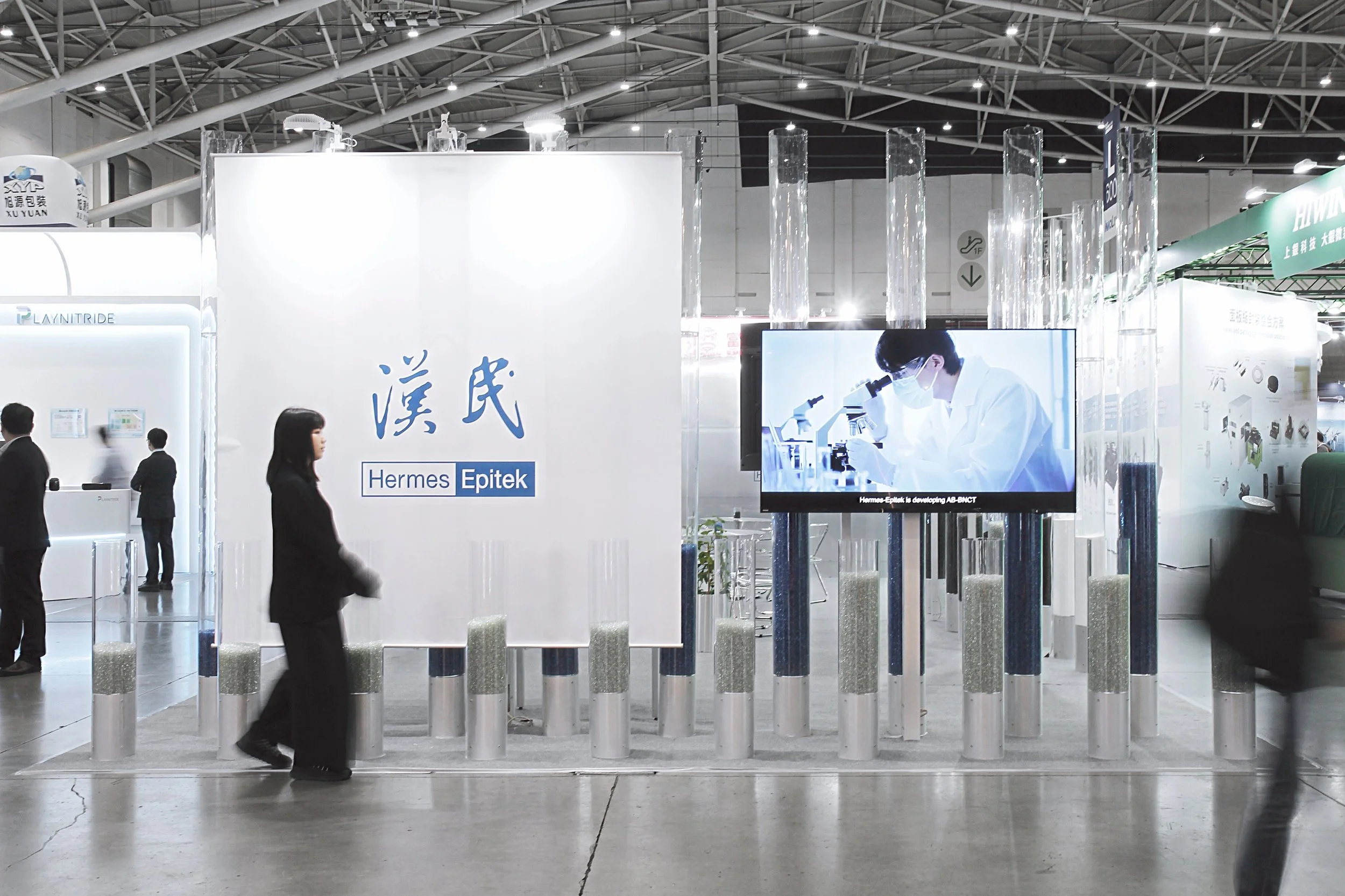
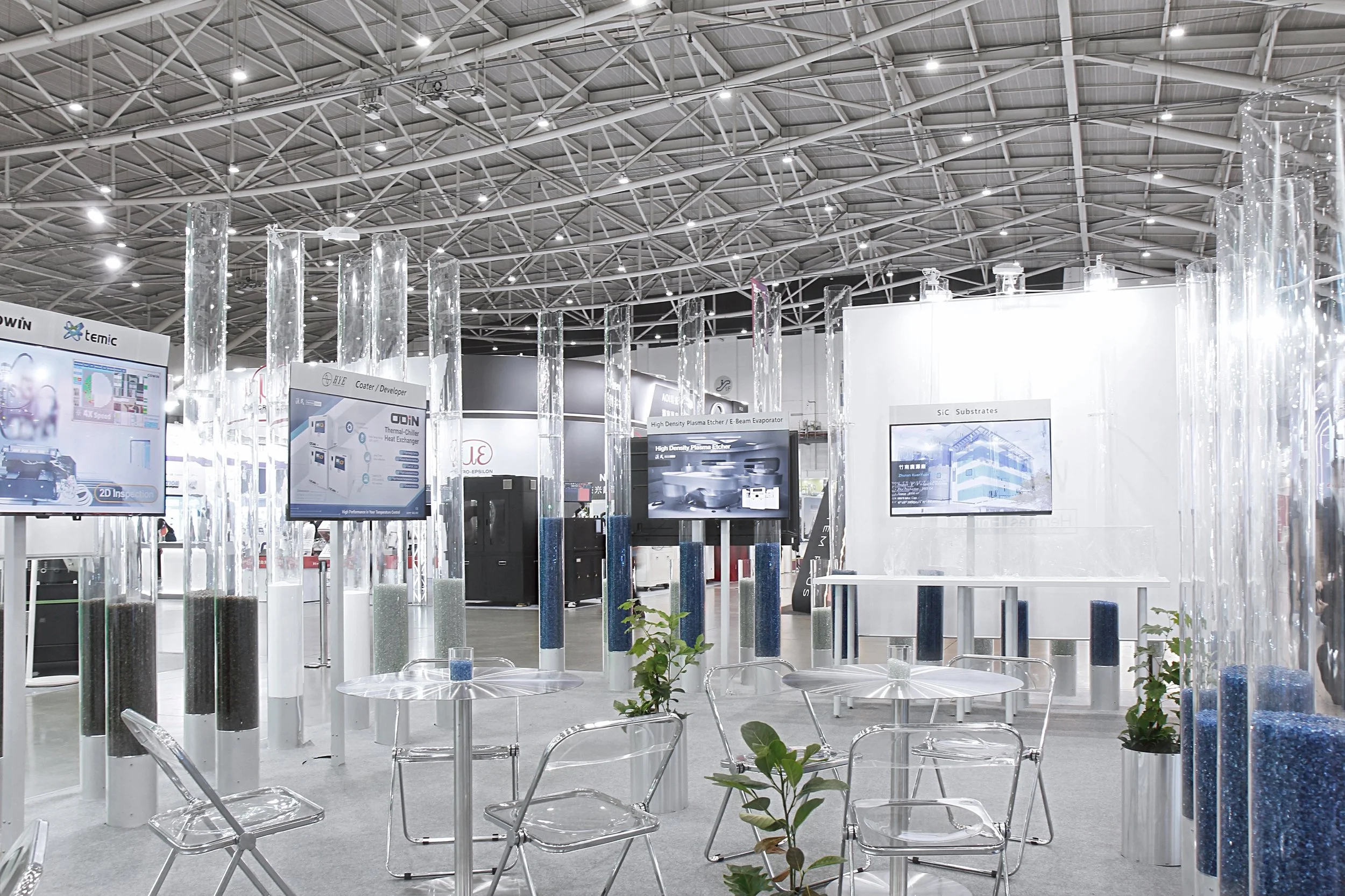
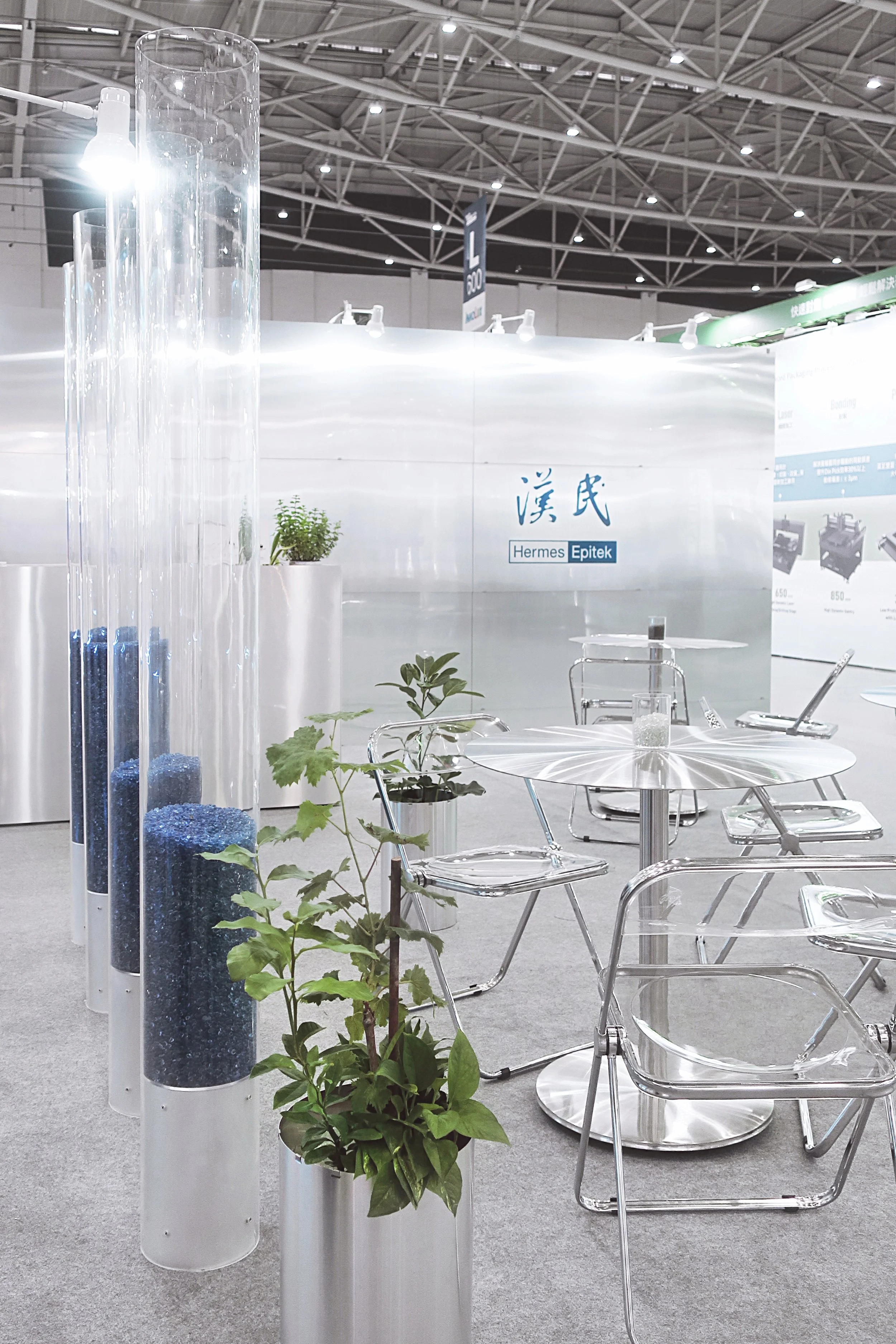
展場以金屬結構與壓克力管搭建,減少一般短期展覽常見的大量木作。透明柱體排列成開放的空間,管內放入玻璃砂、汙泥塊與二氧化矽等不同狀態的物質。光線穿過柱體,呈現沉積、堆疊與純化的層次,壓克力管在展後會繼續使用,本身也能進入回收系統;管內的玻璃砂則在展覽結束後歸還春池玻璃,再次投入使用。
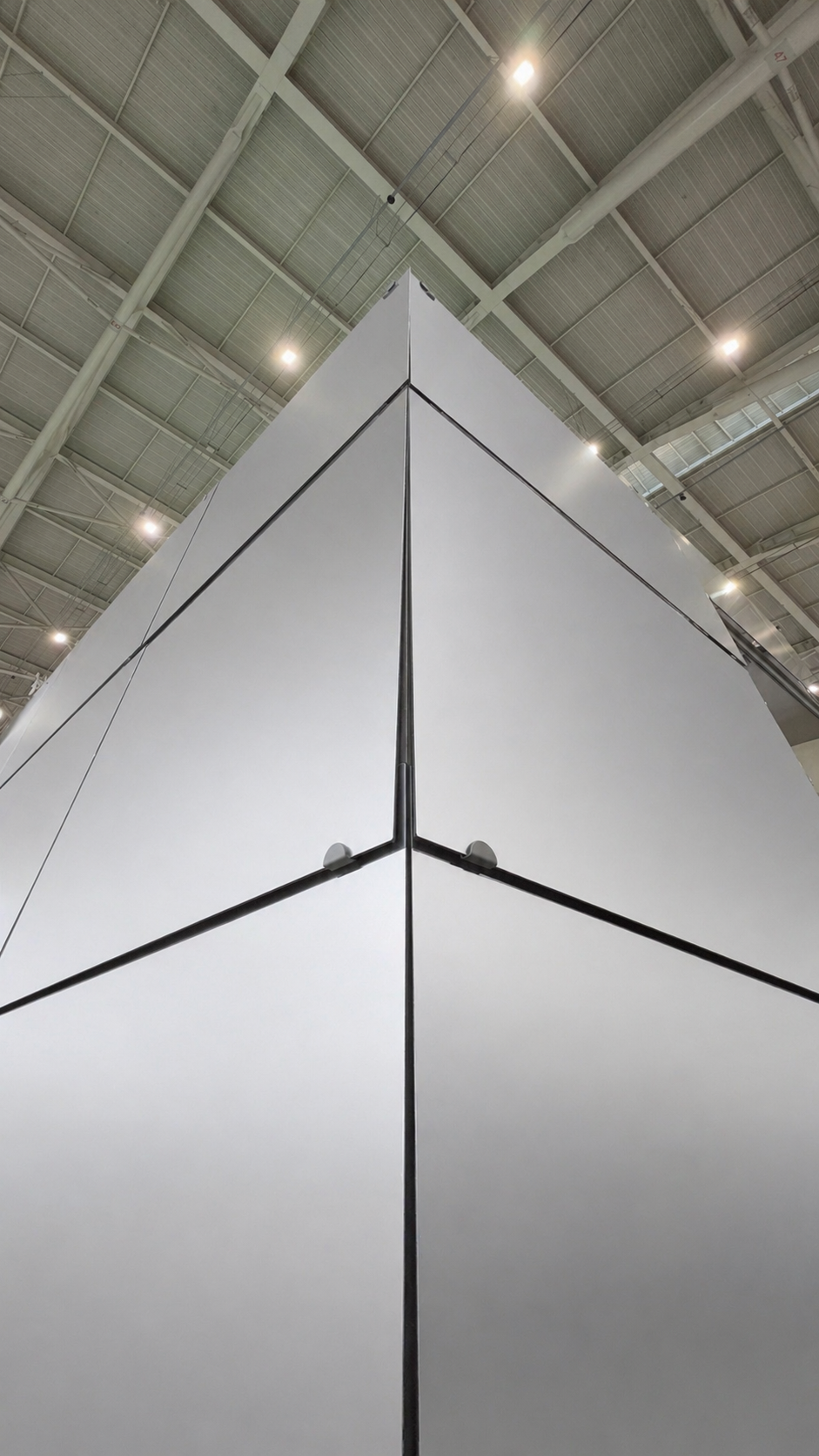
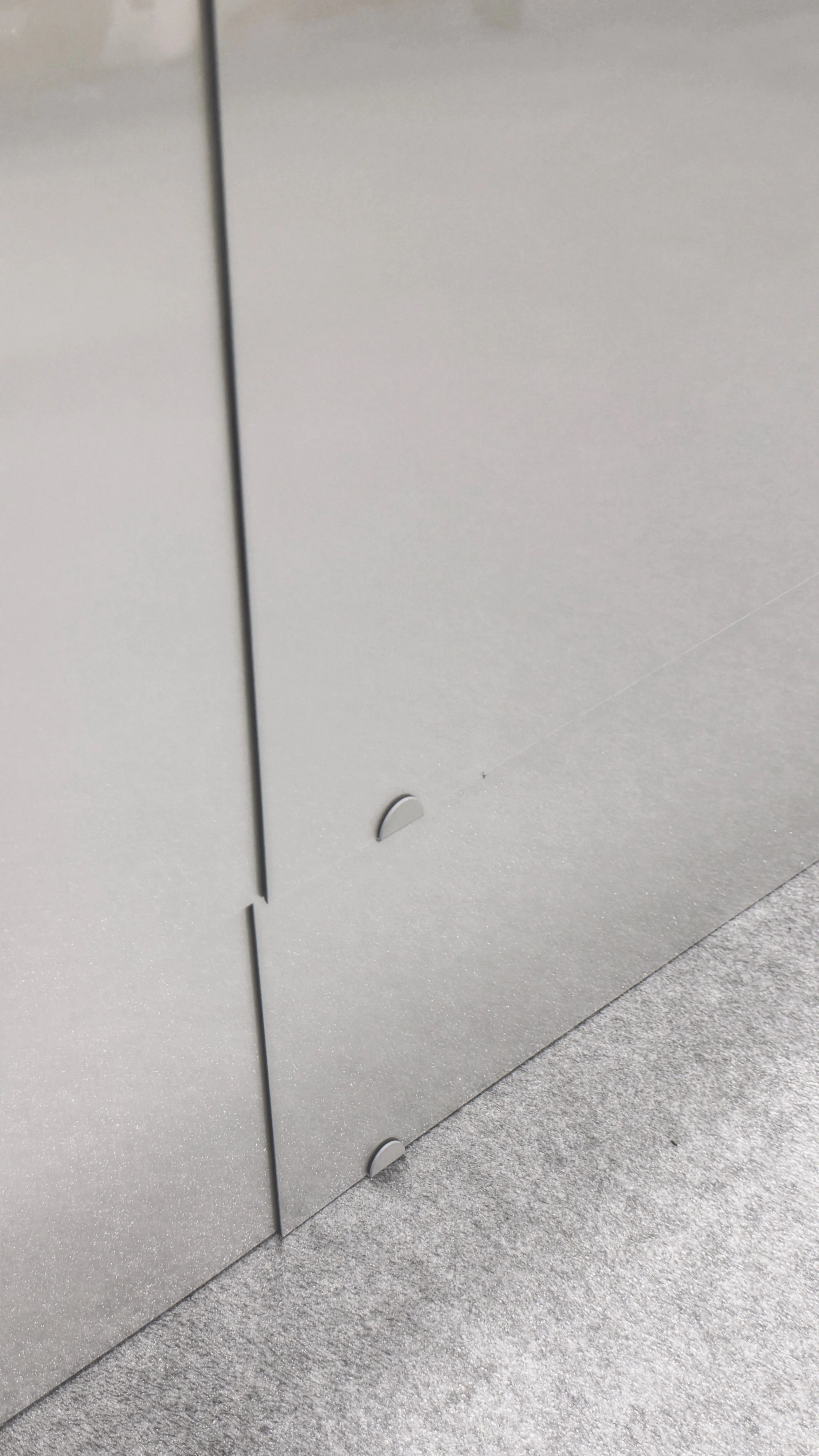
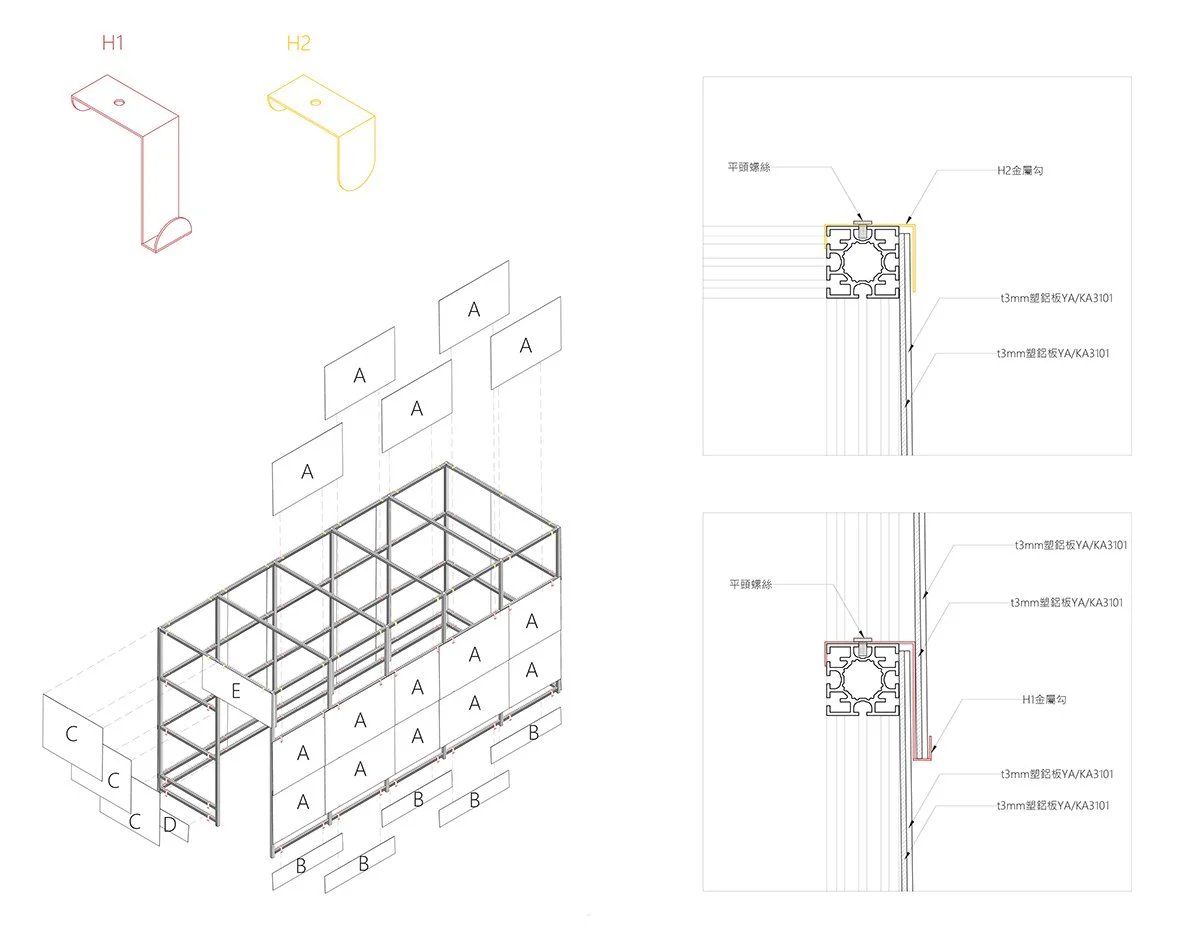
儲藏室使用現成的租賃鋁骨架與板材搭建。施工時不在板材上穿孔,也不使用黏著劑,而是以五金暫時扣住板材。拆除後,鋁架與板材仍能保持完整,繼續投入其他展覽或工程使用。
展品與資訊多以電視、燈箱等數位方式呈現,降低大面積印刷的需求。展場唯一的大型印刷輸出使用宣影布 P-Tex,由 100% 寶特瓶回收再生纖維製成。
從結構、板材、填充材料到展示媒介,設計盡量避免材料因一次展覽而失去用途,也減少拆展後產生的廢棄物,將回收、再利用與減廢落實在搭建與拆除的細節中。
植栽策略
除了技術與製程,展場也呈現漢民對人的重視。漢民的公司空間設有花園、餐廳,以及員工交流與休息的場所,整體環境帶有生活感。
設計延續這項企業特質,選用葡萄、檸檬、波羅蜜與薄荷等日常生活中熟悉的植物,放在透明、理性的展場結構之間,讓空間多了一些接近人的尺度。
Materials and Waste Reduction
The space is built with metal structures and acrylic tubes, reducing the timber construction commonly used for temporary exhibitions.
The transparent tubes form an open field. Inside are glass sand, sludge blocks, and silicon dioxide. Light passes through these materials, showing different states of deposition, accumulation, and purification.
The acrylic tubes will be used again after the exhibition and can later be recycled. The glass sand will be returned to Spring Pool Glass for reuse.
The storage room is made with rented aluminium frames and panels. The panels are not drilled or glued. They are held temporarily with metal fittings, so all parts can remain intact and be used again.
Most information is shown through screens and light boxes. The only large printed surface uses P-Tex, made from 100 percent recycled PET bottles.
The structure, panels, filling materials, and display methods are all considered from the time of construction to dismantling, so fewer materials become waste after one short exhibition.
Planting
The exhibition also reflects the company’s care for people. Hermes-Epitek’s workplace includes gardens, dining spaces, and places for employees to rest and meet.
Grapevines, lemon trees, jackfruit trees, and mint are placed among the transparent structures. These familiar plants bring daily life into the precise and technical space.