2025 Creative expo Taiwan|Culture Curation No.3
2025 臺灣文博會|文化策展區 水風景
The Spirit of Water
有河之靈
展覽類設計/ Exhibition design
松山菸廠3號倉庫/ Taipei, Taiwan
主辦單位|中華民國文化部
合辦單位|國立台灣工藝研究發展中心、文化內容策進院
執行單位|台灣設計研究院 TDRI
文博會總顧問|龔卓軍
文博會協同策展人|柯智豪、彭雅倫
策 展 人|曾雅欣、林中一
策展規劃|嶼人設計工作室
空間設計|嶼人設計工作室
藝術行政|王詩儀
互動投影|光滿樓 LightFull Studio
現場施工協調|徐益謙、林介一
現場施工|李盼萮、楊俐璇、曾仁美、洪品璇、林芃
投影機贊助|ViewSonic 美商優派股份有限公司
協力團隊|伸茂園藝溫室工程、西北水電
黑金剛廣告股份有限公司、全印象印刷
空間攝影|丰宇影像、黑鳥音像 BlackBird Imagine Studio
環境音樂|柯智豪音樂工作室Blaire Ko Music Studio
特別感謝|廣興紙寮、屏東縣政府、FREES 福利事、
Chu's studio 朱朱藝術創作工作室、
台北木偶劇團、A_Root 同根生、
微笑唸歌團/儲見智、 賴伯威、
新興糊紙店、何敬堯、魚儂、瀟湘神、
Fxiii 刺繡插畫/ Faye 簡靖芳
社團法人中華音樂著作權協會、
Ilid·Kaolo 以莉·高露、
Chalaw‧Basiwali 查勞・巴西瓦里
台灣水體的精神生態
The Spiritual Ecosystem of Water Body
Across the continents, oceans connect the world—yet water has always stirred complex emotions.
Amniotic fluid is our first home; the ocean, the origin of all life. Water marks both the beginning of existence and the place where culture and belief intertwine.
When shapeless water takes form—as shifting rivers, unfathomable lakes, or immeasurable seas—it becomes an “otherworld,” set apart from land. We fear its depth, yet imbue it with boundless imagination.
In Taiwan’s diverse water beliefs, Indigenous myths describe ancestors emerging from the ocean or migrating to the mountains after great floods. On the plains, tales speak of the “blind serpent” that swells rivers and reshapes their course. Communities have dug wells, built irrigation channels, and held rituals to honor water spirits. The Siraya people offered ancestral rites with jars of water; coastal villagers send divine boats across the sea to ward off disease.
世界各洲以大洋相連,人們對「水」始終懷抱複雜的情感。羊水是人類最初的居所,海洋則是萬物的起源。
水,既是生命的開端,也是信仰與文化交織之處。
當無形的水凝聚成形,成為變幻莫測的河流、深不見底的湖、與難以度量的海,它們自成一方與陸地隔絕的「他界」,令人畏懼其深邃,也寄予無限想像。
在臺灣的水信仰中,原住民族神話描繪祖先來自海洋,或因洪水遷徙至高山的敘事;平原上流傳著「青暝蛇做大水」的說法,形容溪河如盲蛇般任性改道。人們為生活開井建圳,並祭祀水靈;西拉雅族以壺盛水祭祖,沿海居民則迎神船渡海驅疫。
When the Space Set the Terms
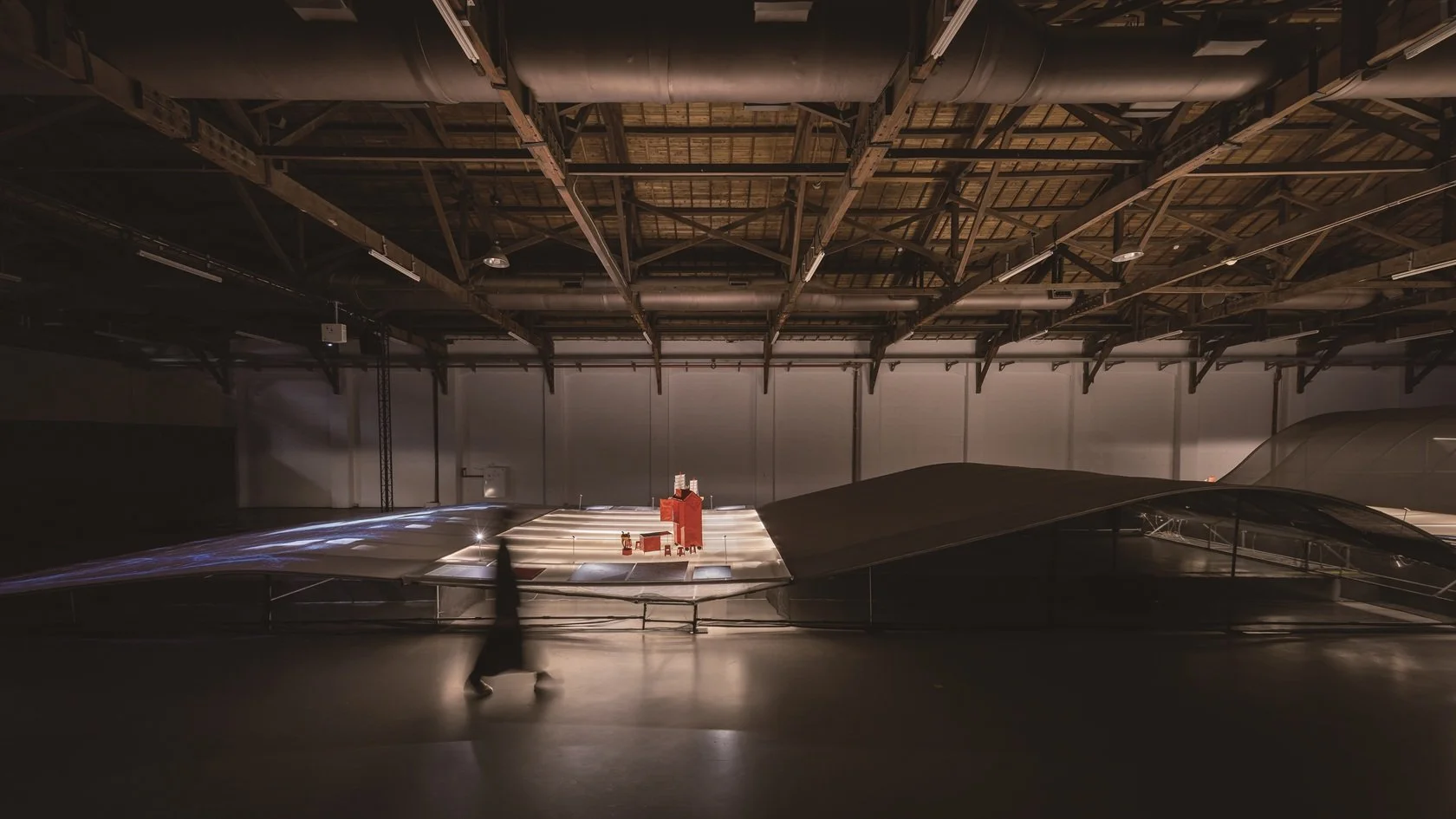
The exhibition unfolds in Warehouse No. 3 at Songshan Cultural and Creative Park, a historic structure from the Japanese colonial period. As a protected heritage building, nothing may be nailed to the walls or suspended from above. The interior is long and narrow, with a central platform rising about thirty centimeters from the floor.
What could have been seen as limitations instead became the framework of the design.
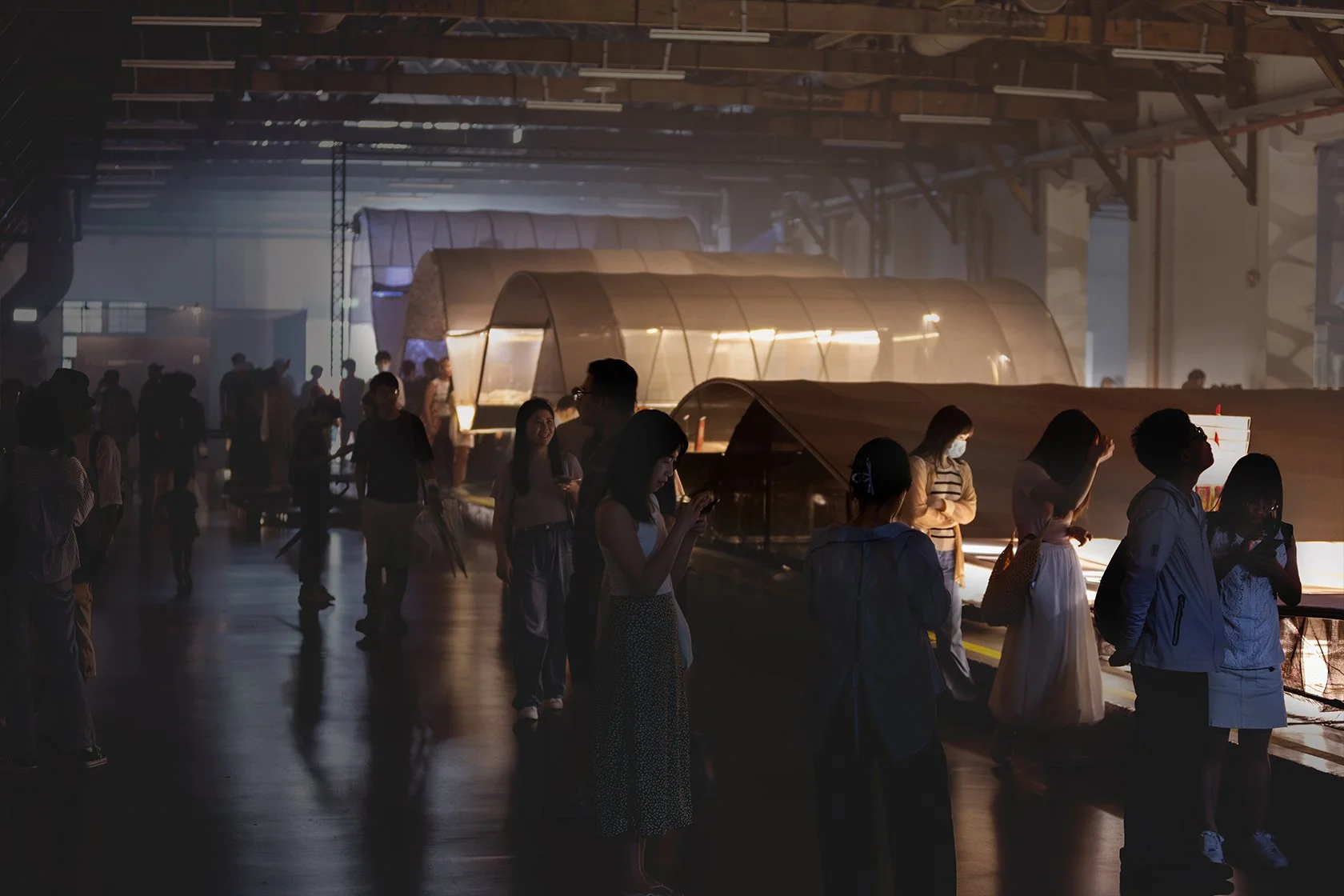
The main exhibition structure is positioned at the center, allowing visitors to move around it or step into the space. The existing change in level is absorbed into the landscape itself. Light becomes the guiding spatial element, responding to the themes of water and spirit, allowing intangible beliefs to be quietly perceived through space.
場地條件與策展起點
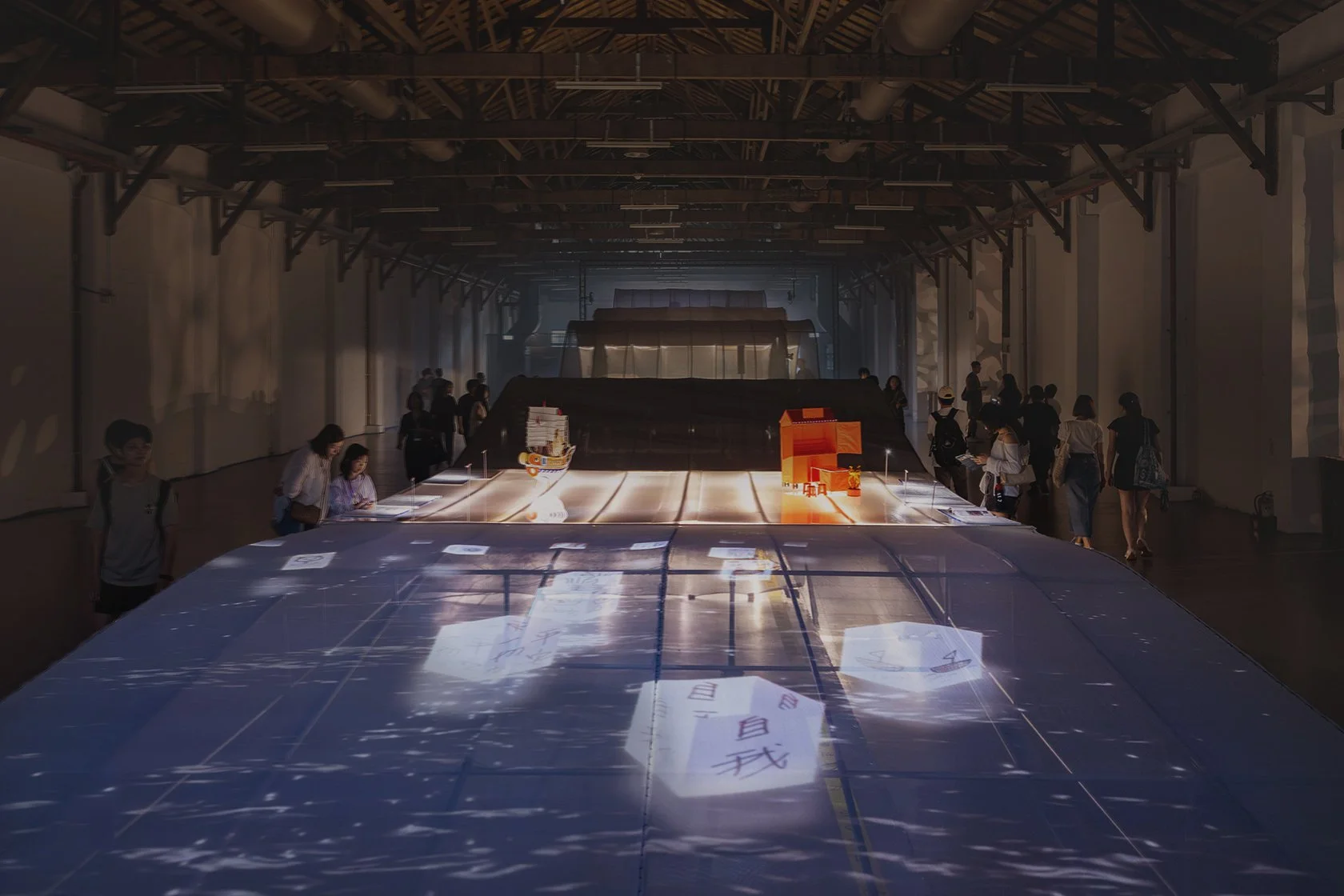
展覽位於松山文創園區三號倉庫,為日治時期留下的歷史建築。作為古蹟,空間不能釘掛、物件不能靠牆,也無法以懸吊方式設計裝置;倉庫狹長,中軸線還有一條高約三十公分的平台。
這些條件讓空間操作受到限制,但也反過來成為設計的起點。
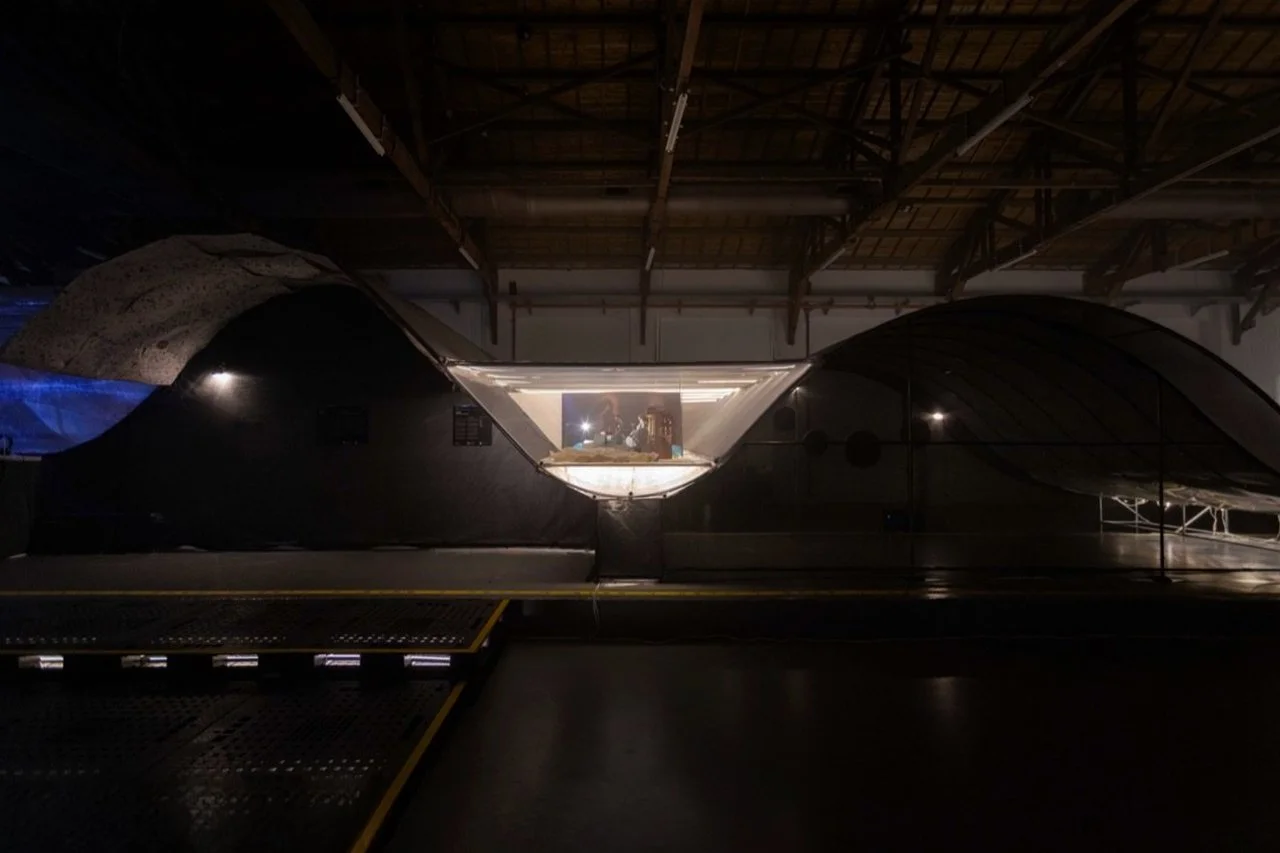
空間策略上,將展台置於空間中央,邀請觀眾繞行其外,或進到內部,也把高低差轉化為地景的一部分。並選擇以「視覺光感」為核心,回應「水風景」與「水之靈」的主題,讓抽象的信仰意象在空間中被感知。
材質、尺度與沉浸氛圍
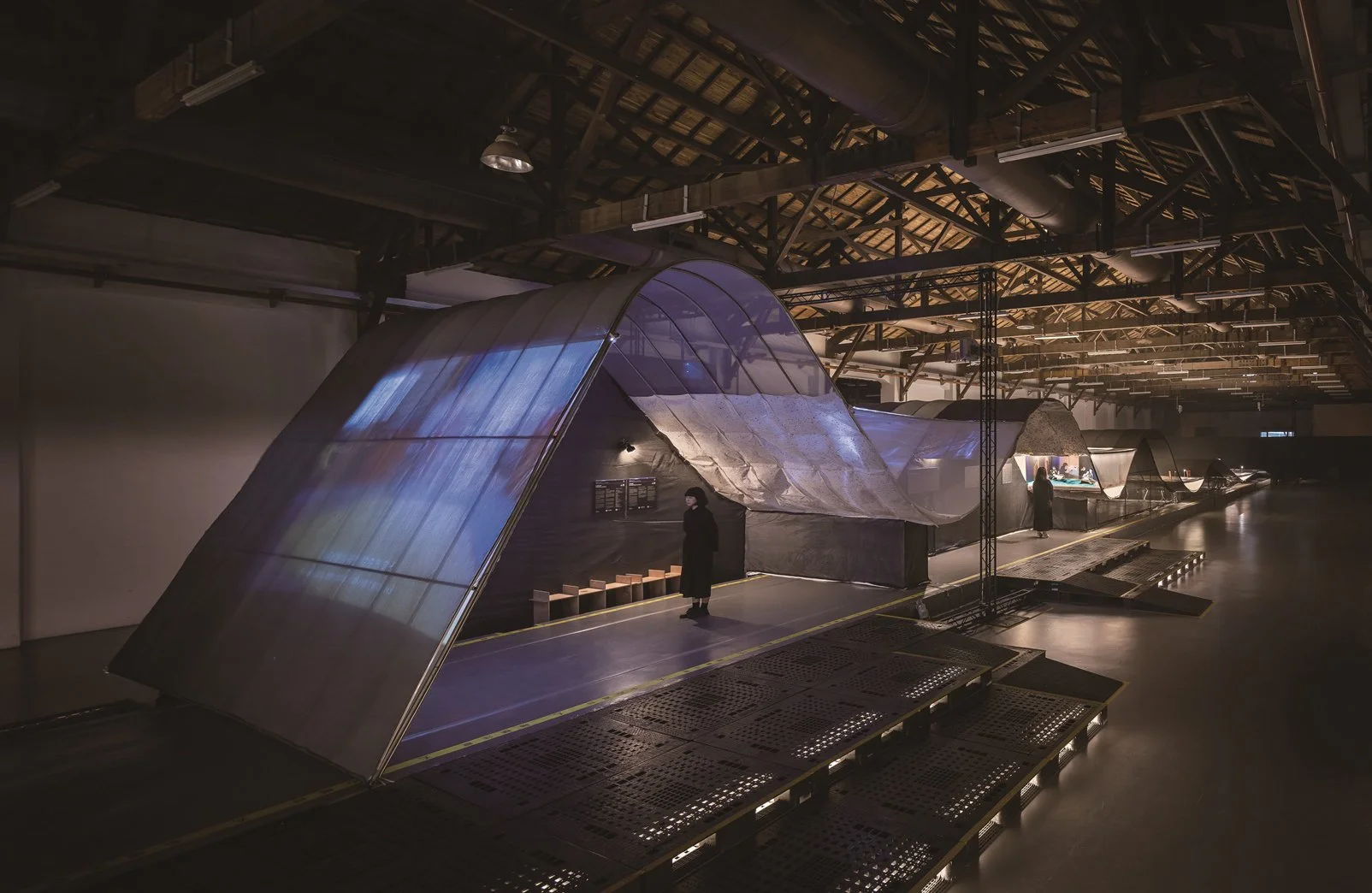
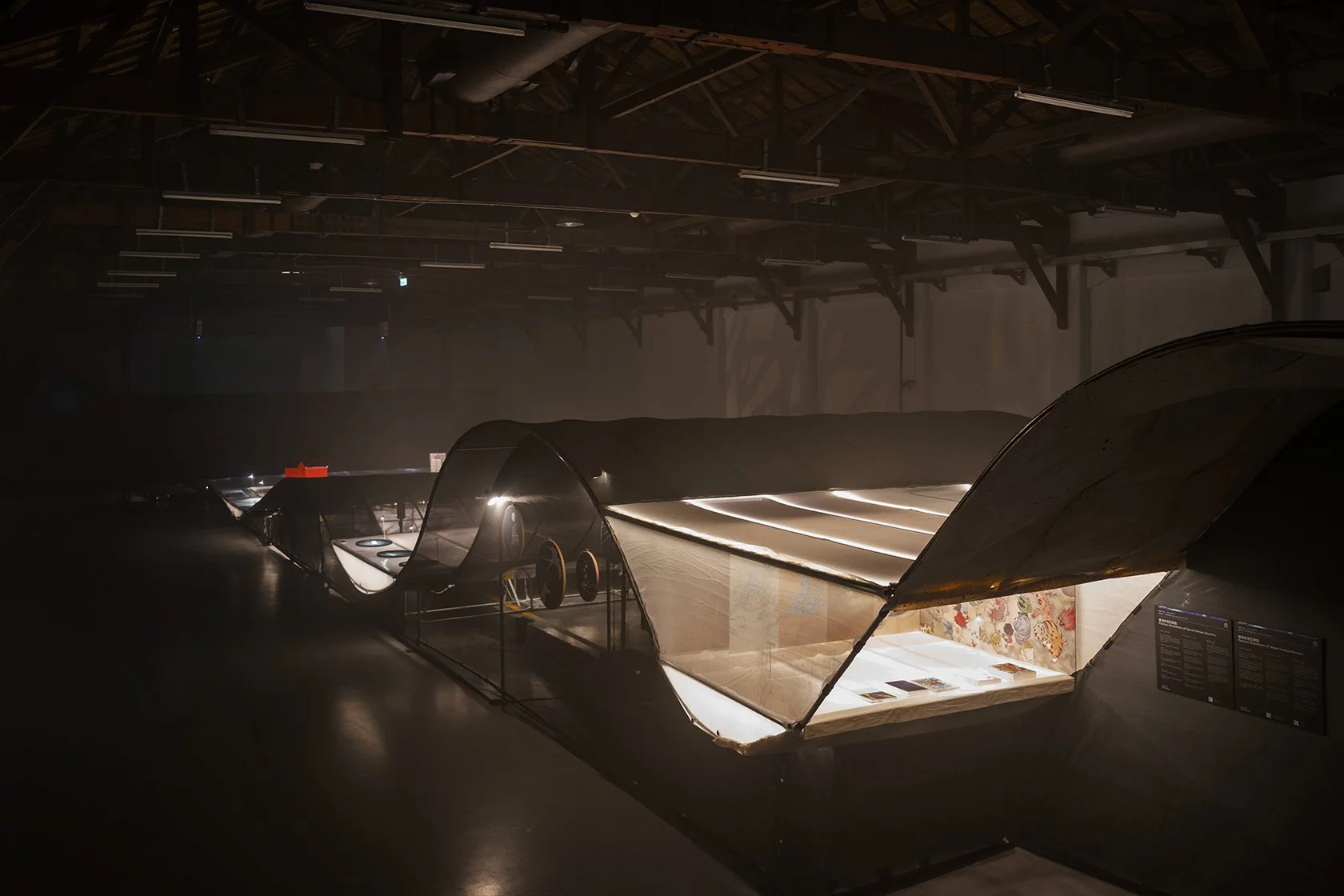
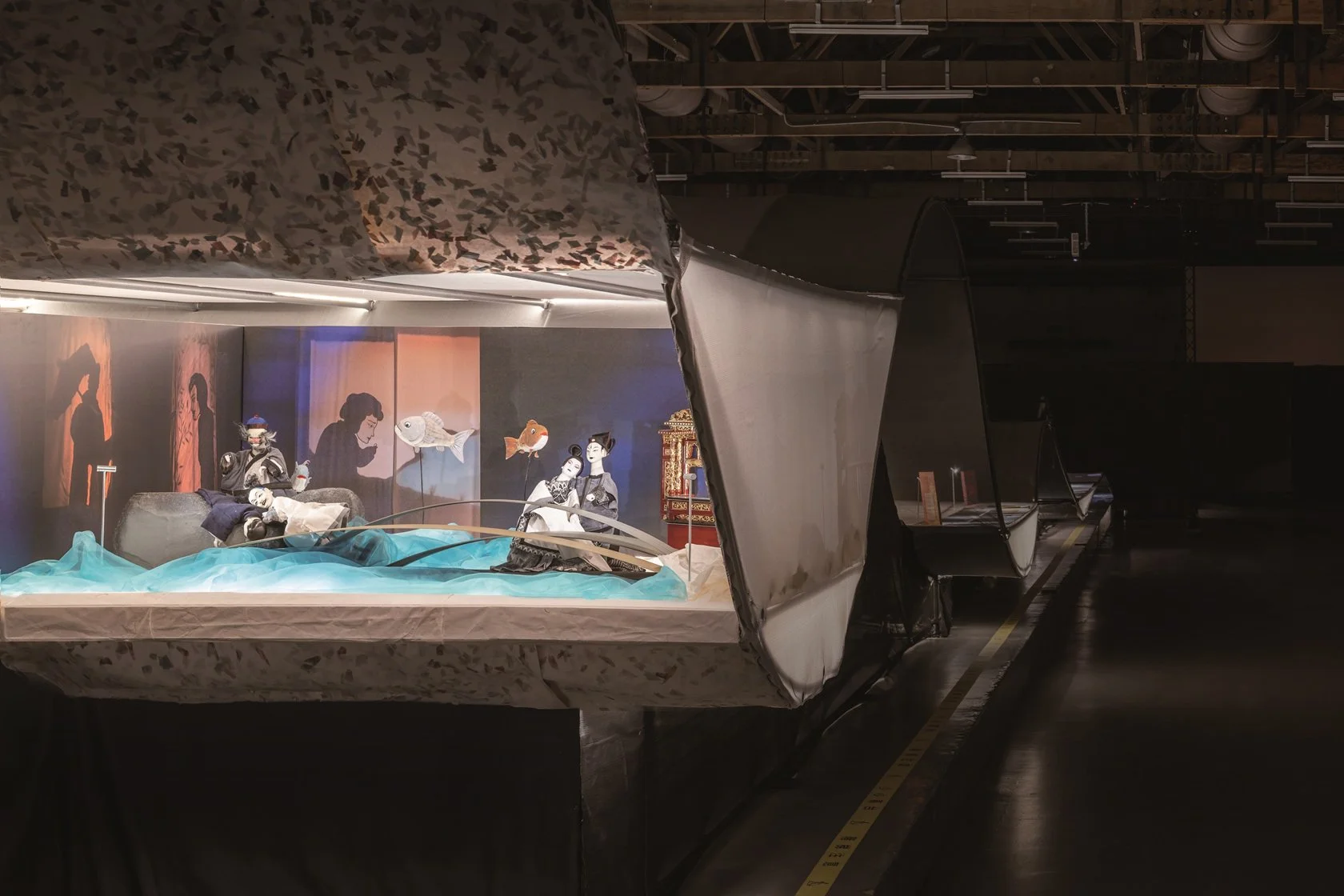
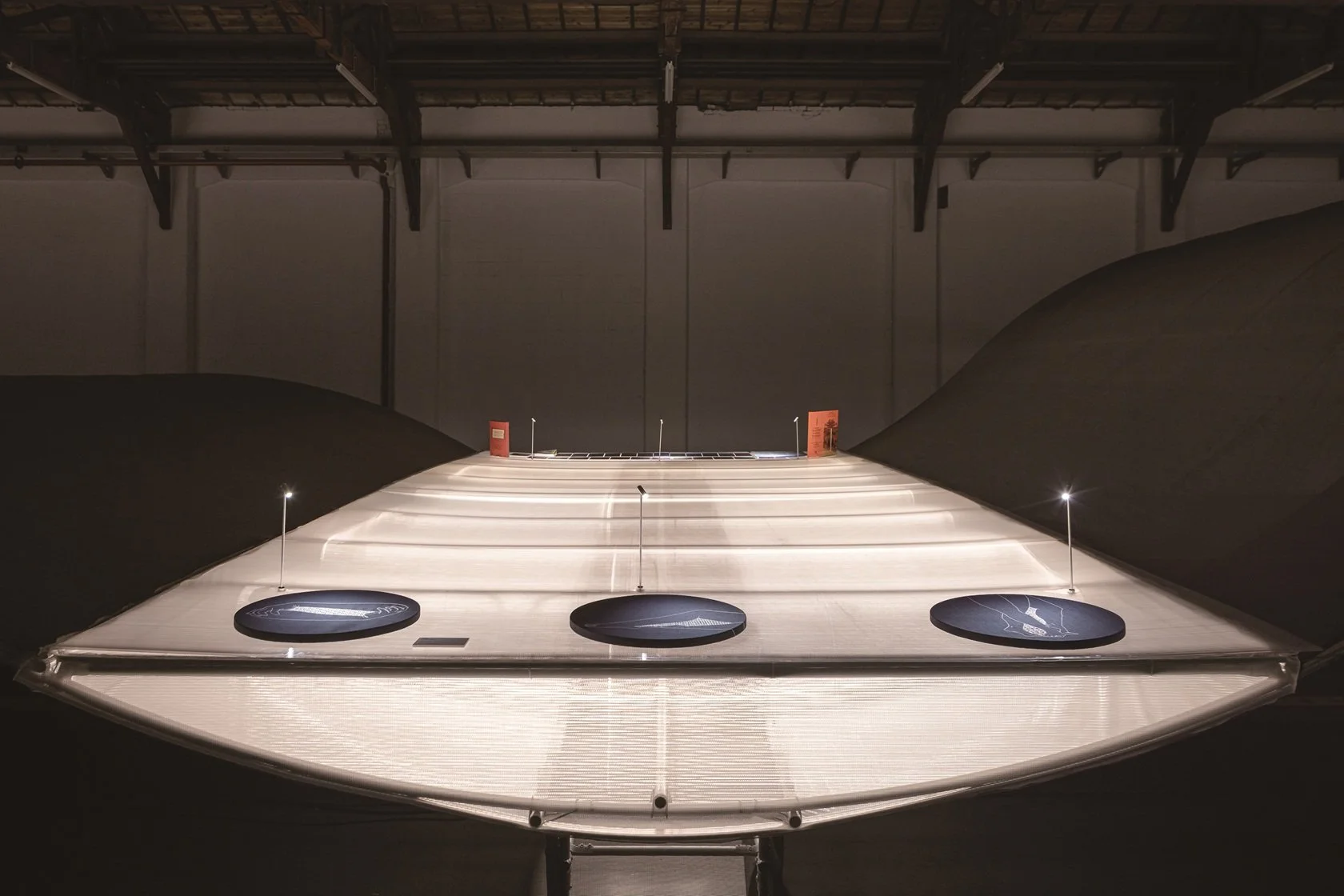
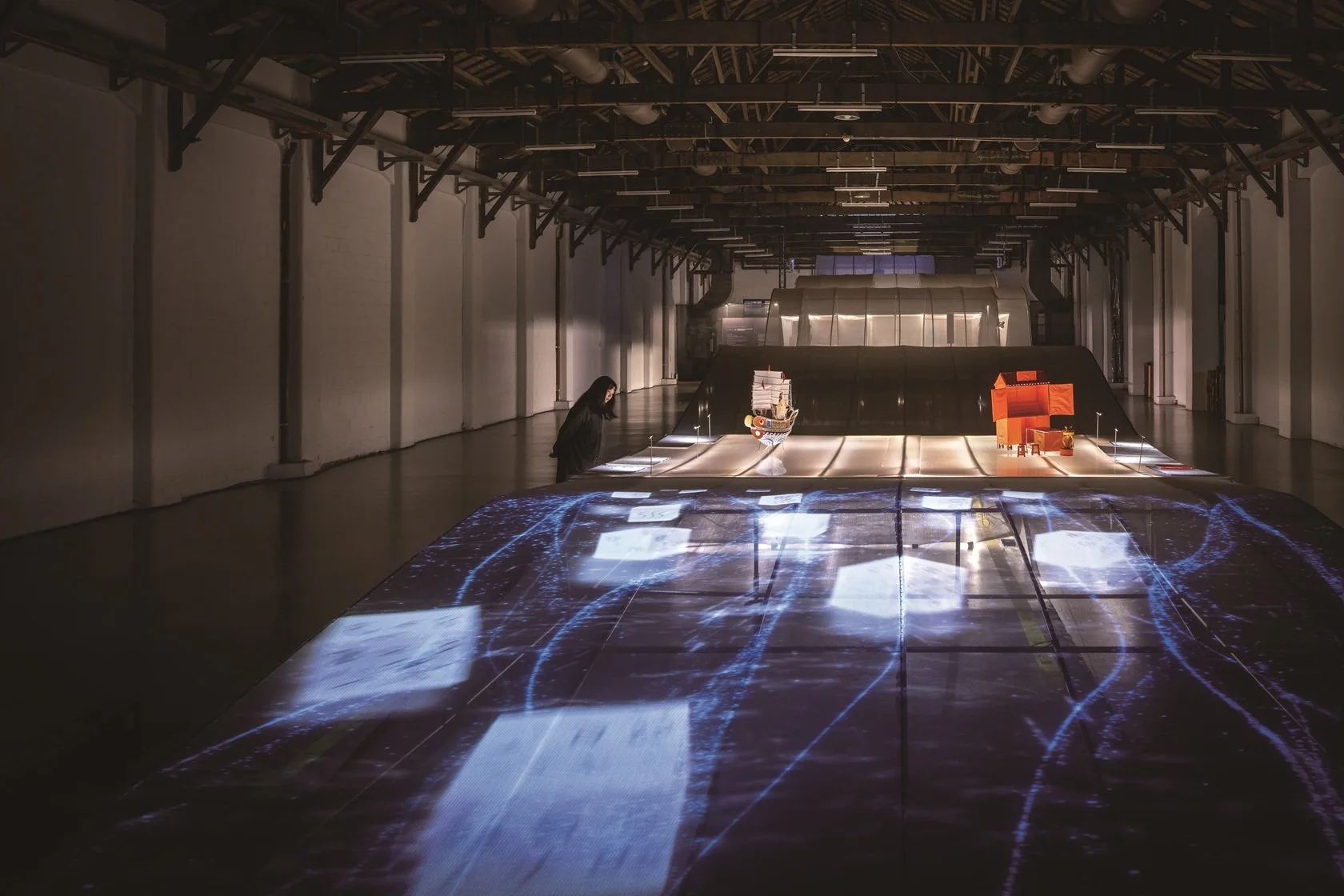
主展台以農業溫室鋼架系統搭建成波浪狀空間裝置,覆以半透明網布與紙材。材質輕巧、透明而朦朧,呼應台灣鄉野常見的視覺氛圍。紙在傳統信仰造像中被視為容易「入靈」的媒介,也與水之靈的主題互相呼應。
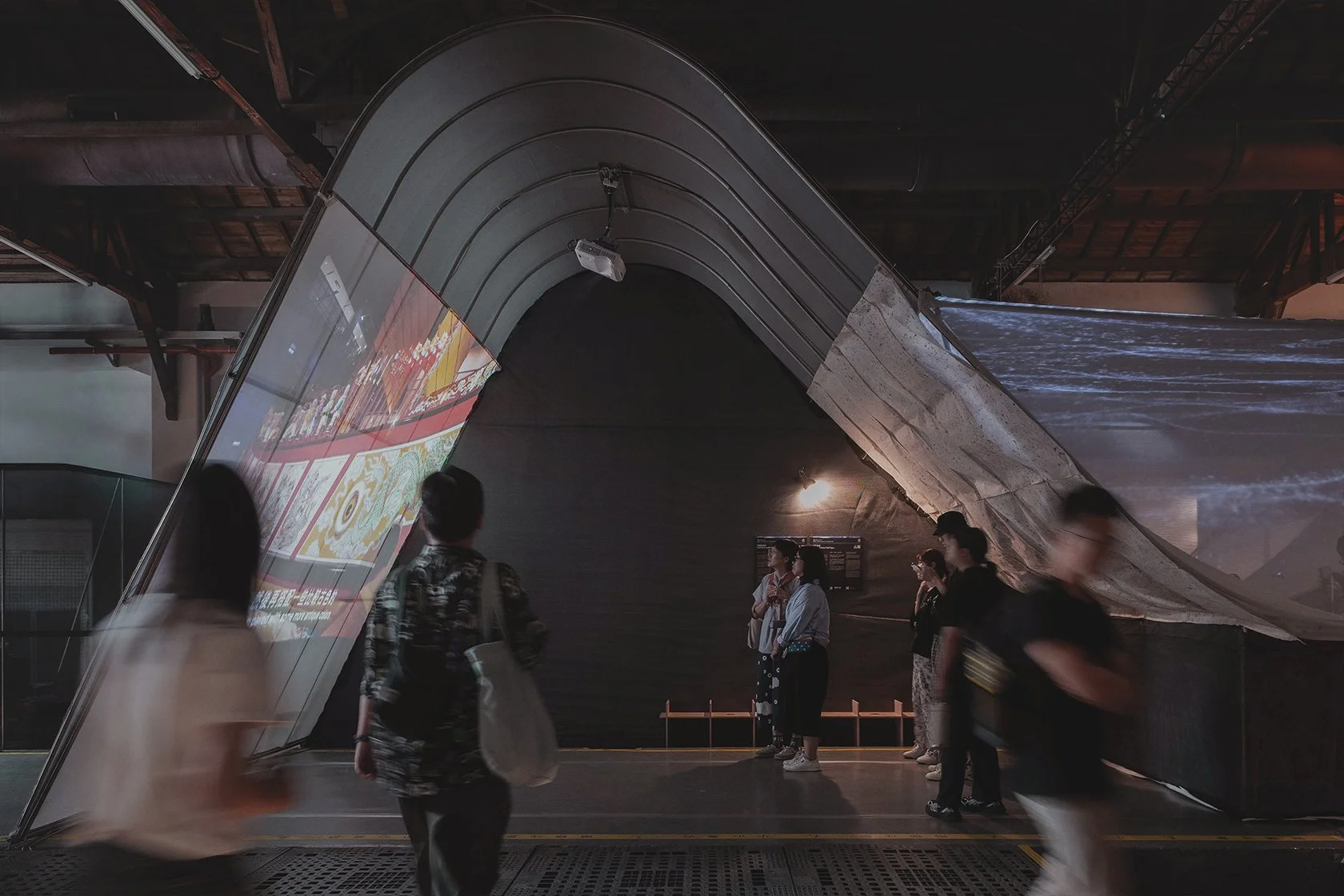
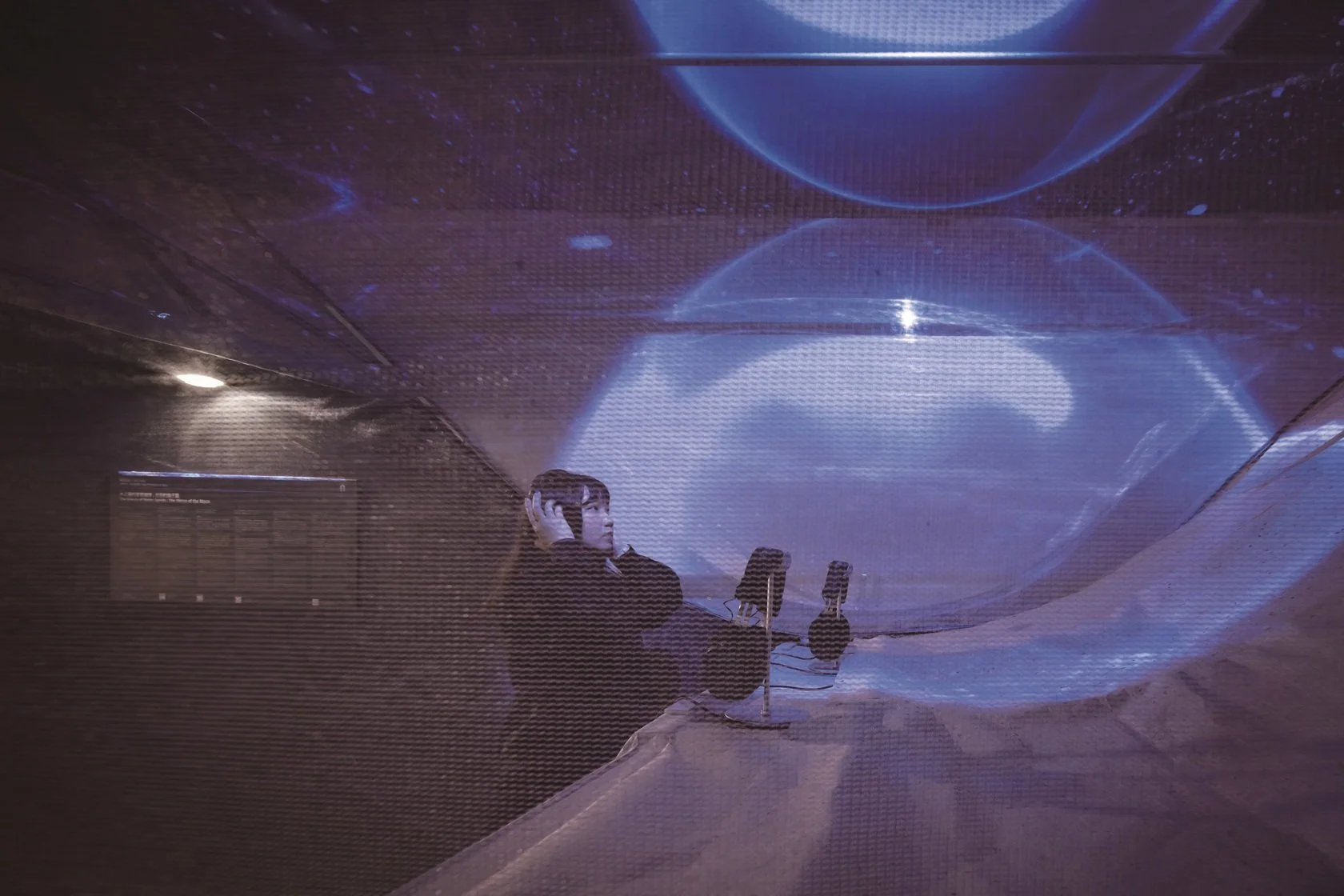
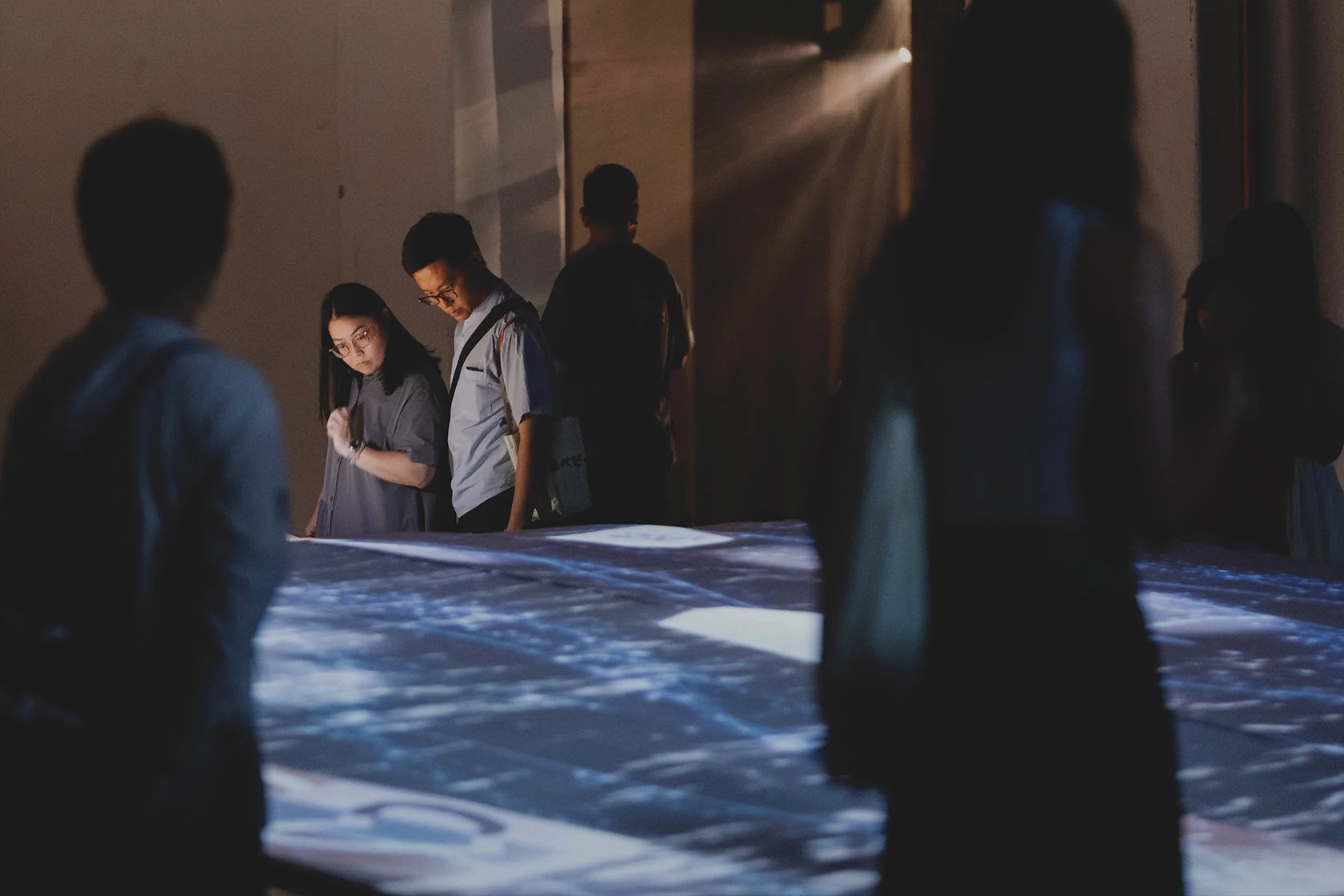
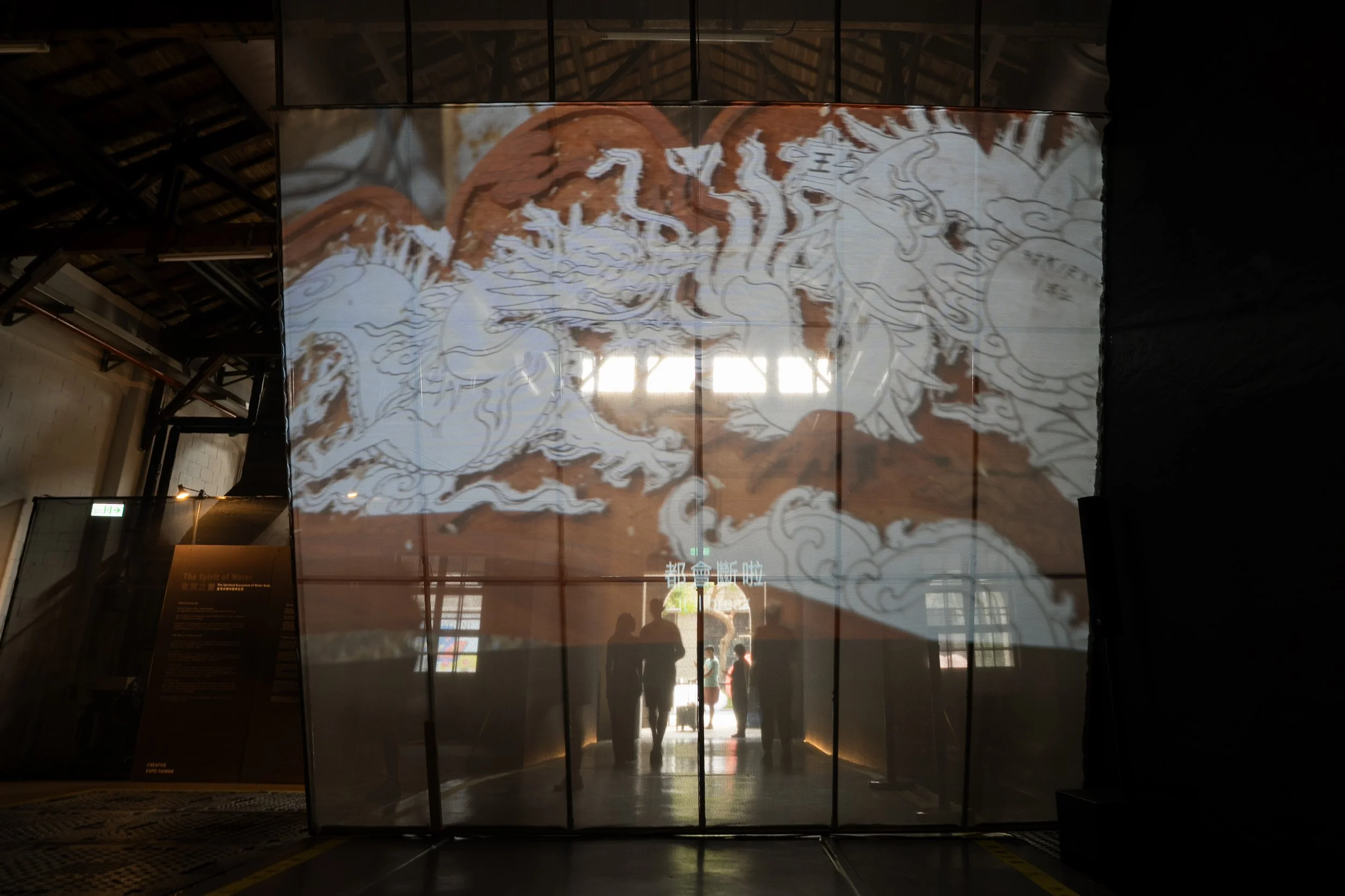
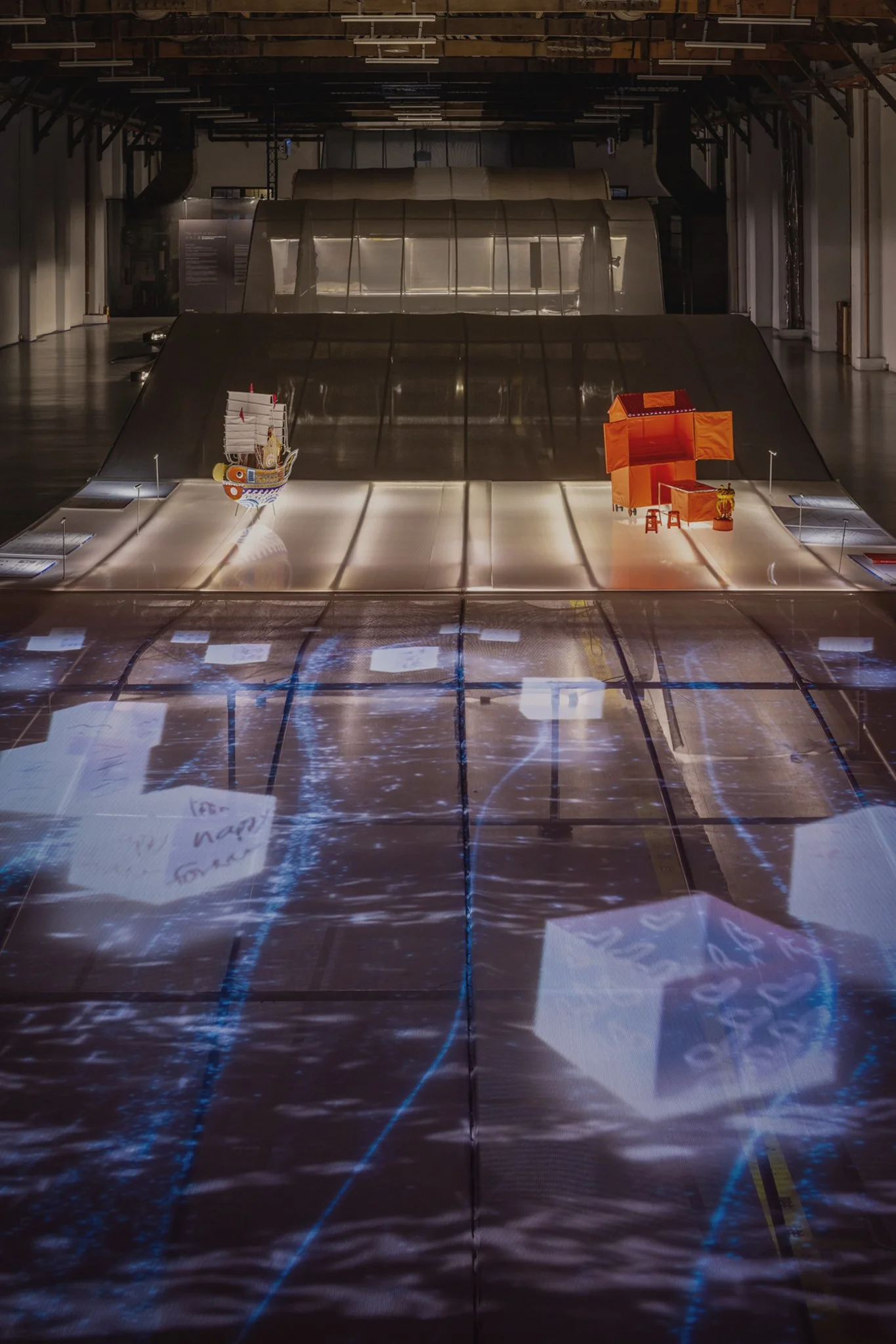
不同孔隙密度的網布作為投影介面,使光影呈現水下的幽暗、水面的流動與河口的閃爍。投影範圍盡量與展台融為一體,利用波峰波谷的起伏與陰影模糊邊界。多數採背面或雙面投影,影像落在透明素材上,能看見人影在其後穿梭,讓河水的意象如浮光般立體漂浮於空間之中。
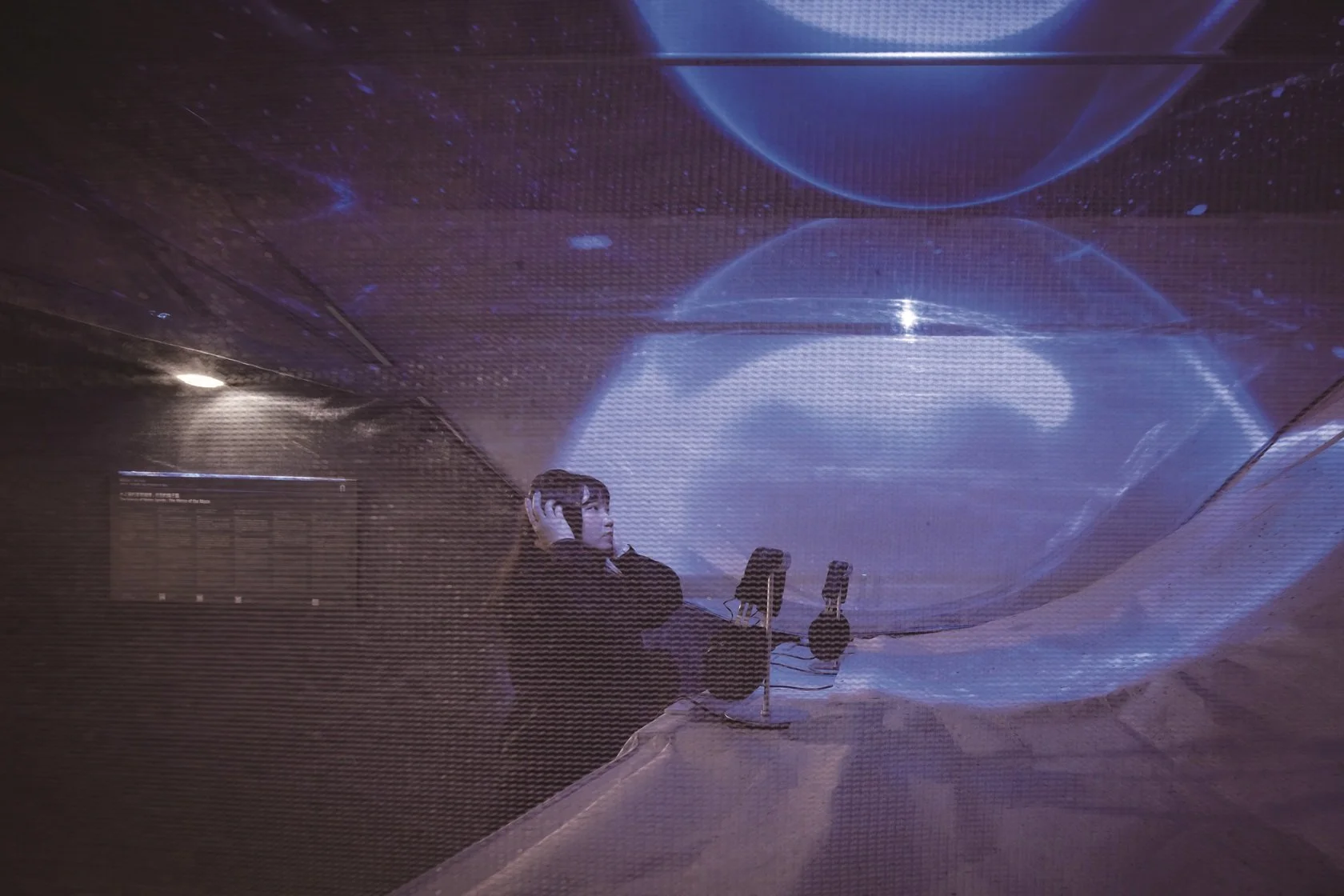
因為這個展覽談的是水信仰、水儀式與水傳說,我們希望互動技術的存在感縮到最小,用來烘托「靈」的存在型態,讓空間多一點神祕感、沉浸感和儀式感。
動線秩序
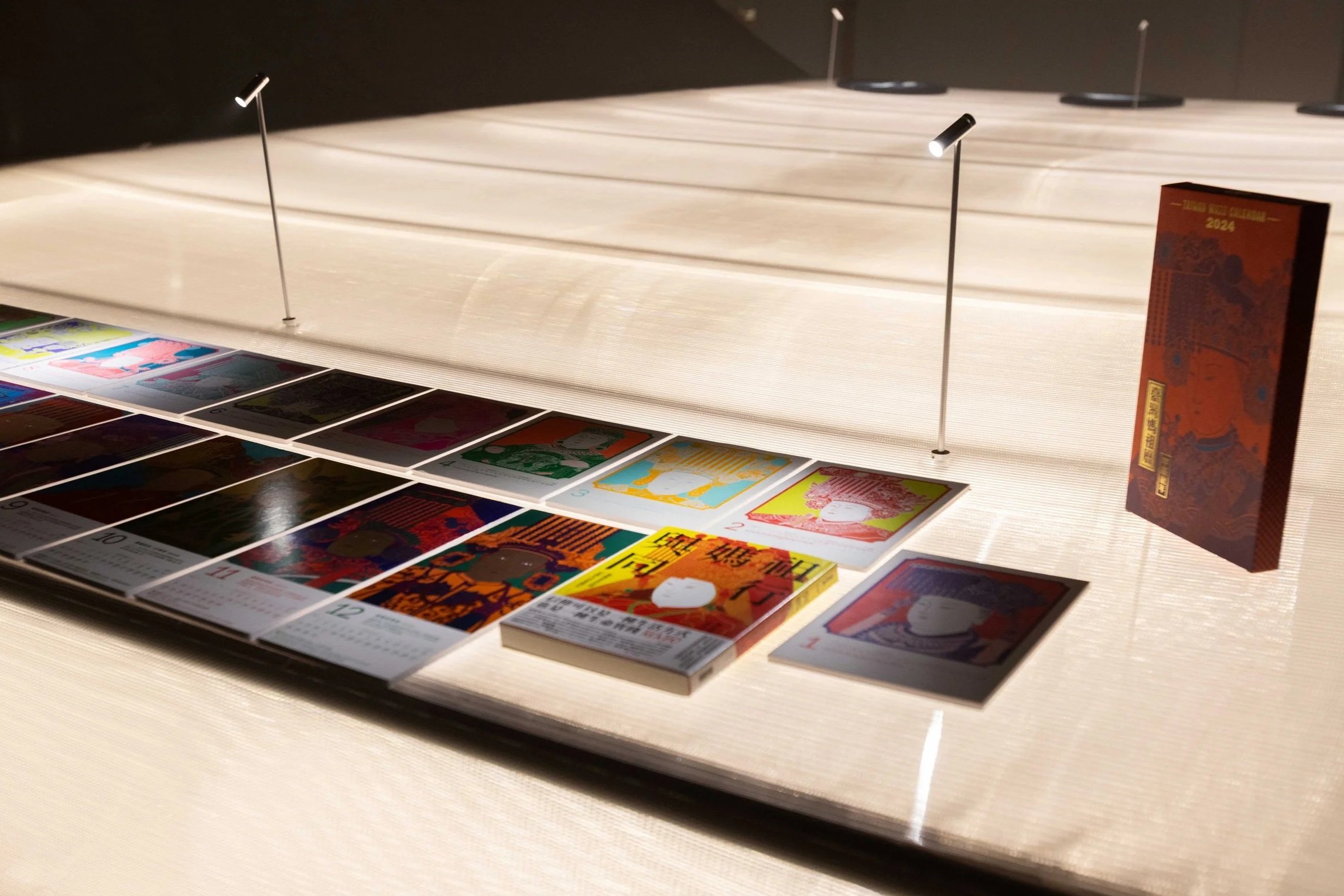
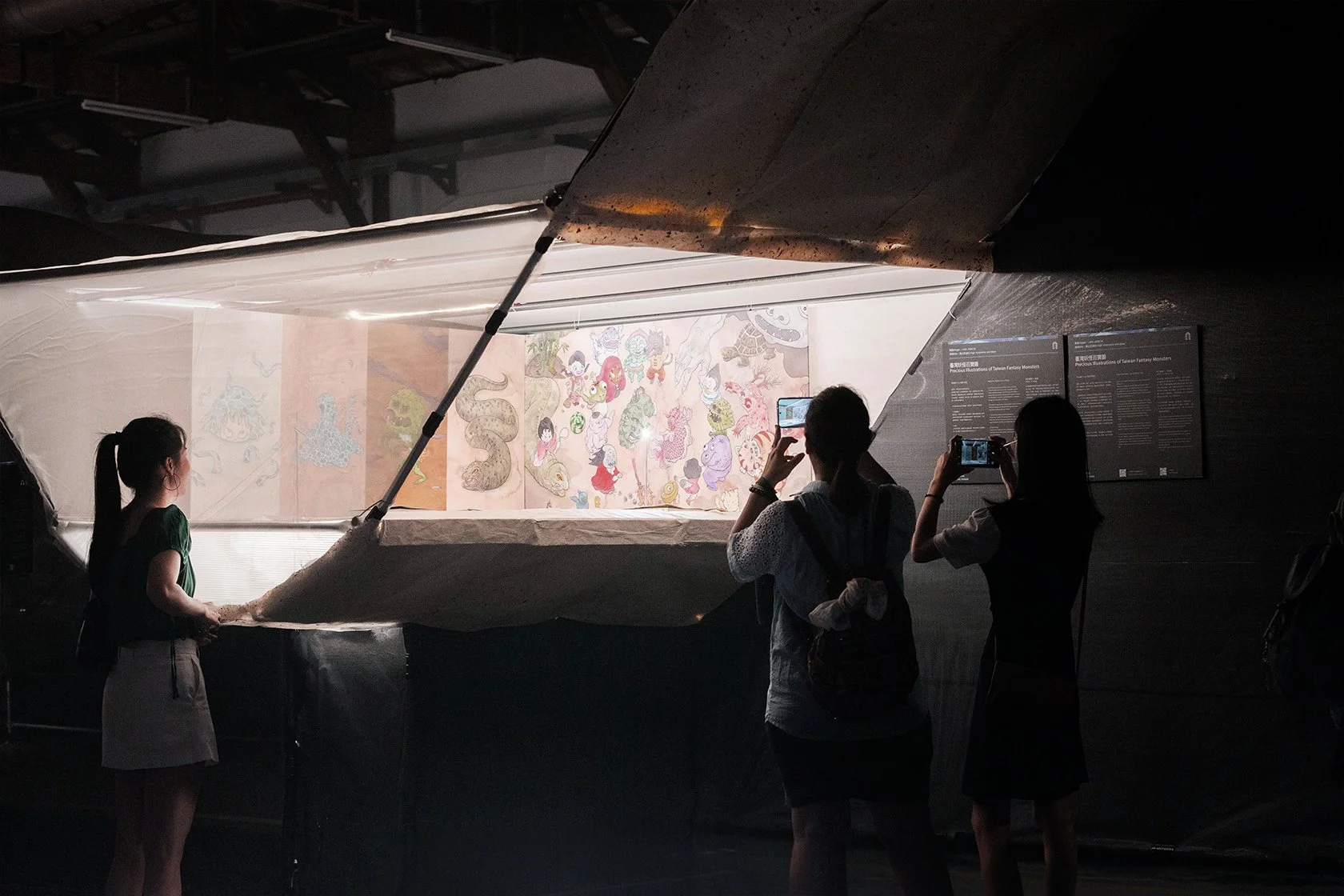
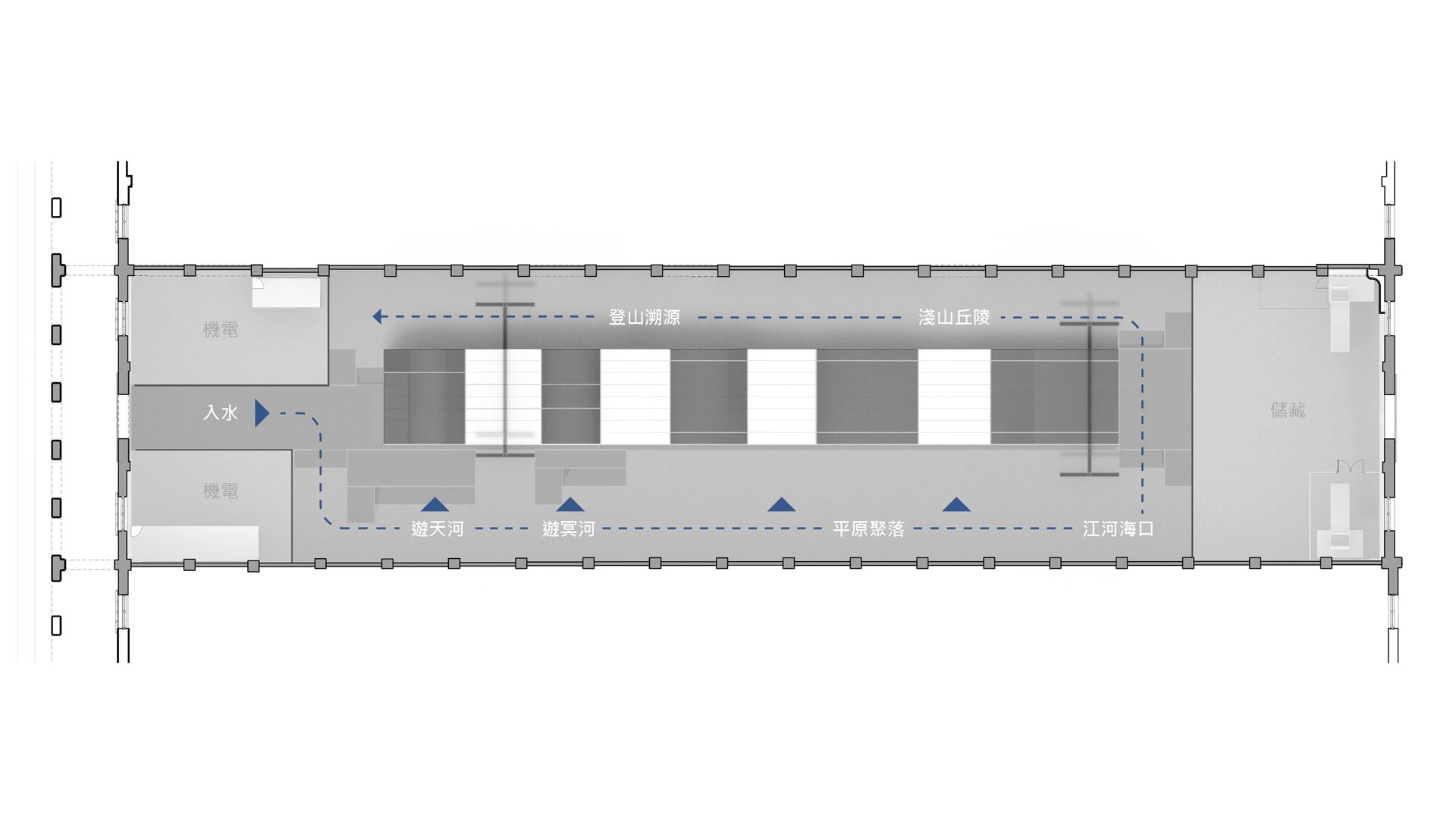
《有河之靈》聚焦於臺灣族群對於水的記憶與信仰,透過聲音、影像、文物與互動裝置,讓觀眾看見、聽見不同族群的水祭儀式、信仰工藝與故事傳說。
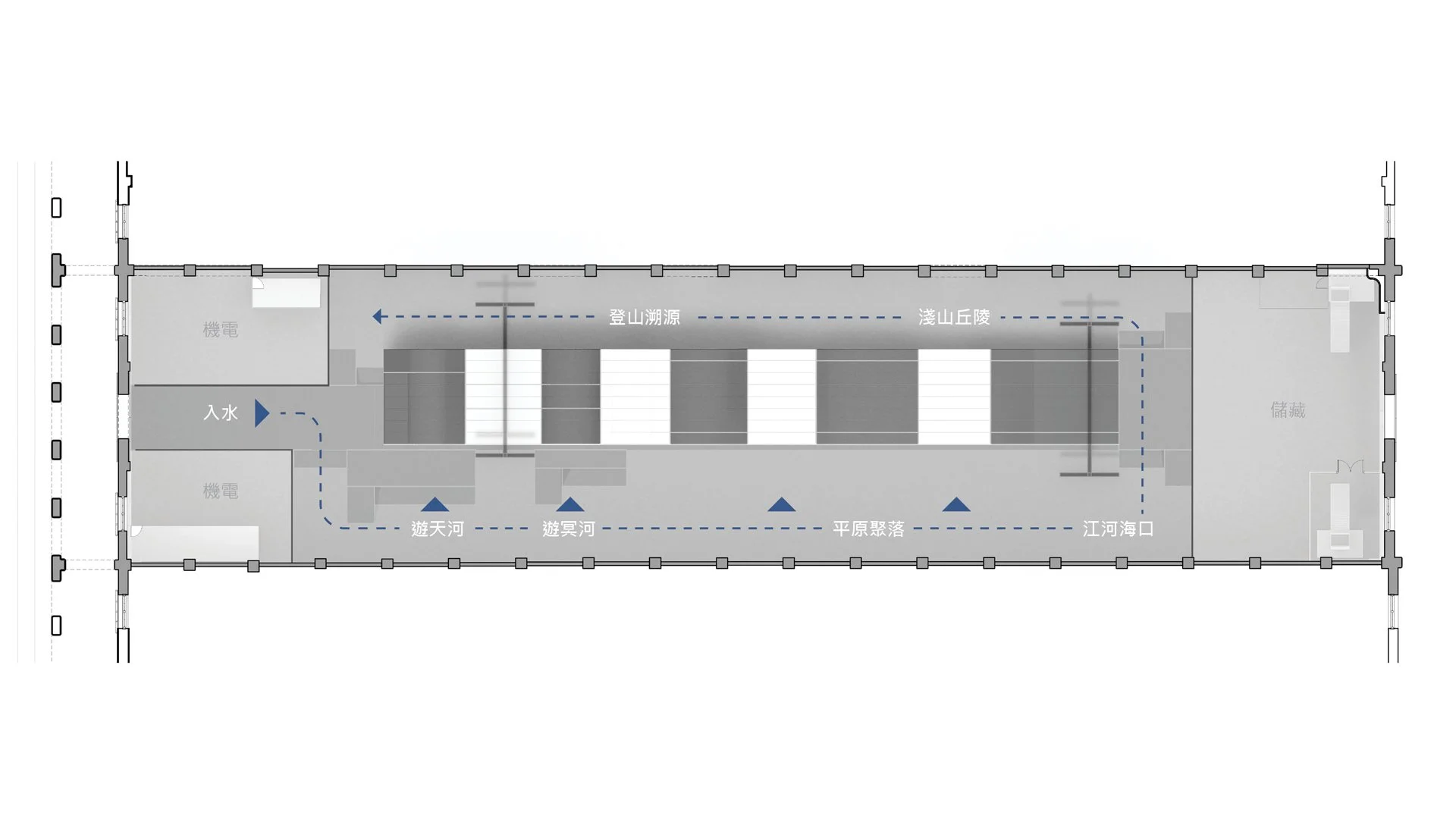
這些物件、展品,融入一座抽象的臺灣地景展台之中,模擬自高山溪流至海口的地貌,觀眾入場時先望見高山,繼而潛入冥河,在眾神與眾生的喧嘩中穿行,沿途經過象徵江河、埤圳等水體的展台段落,展出相應地理環境的族群水文化內容。
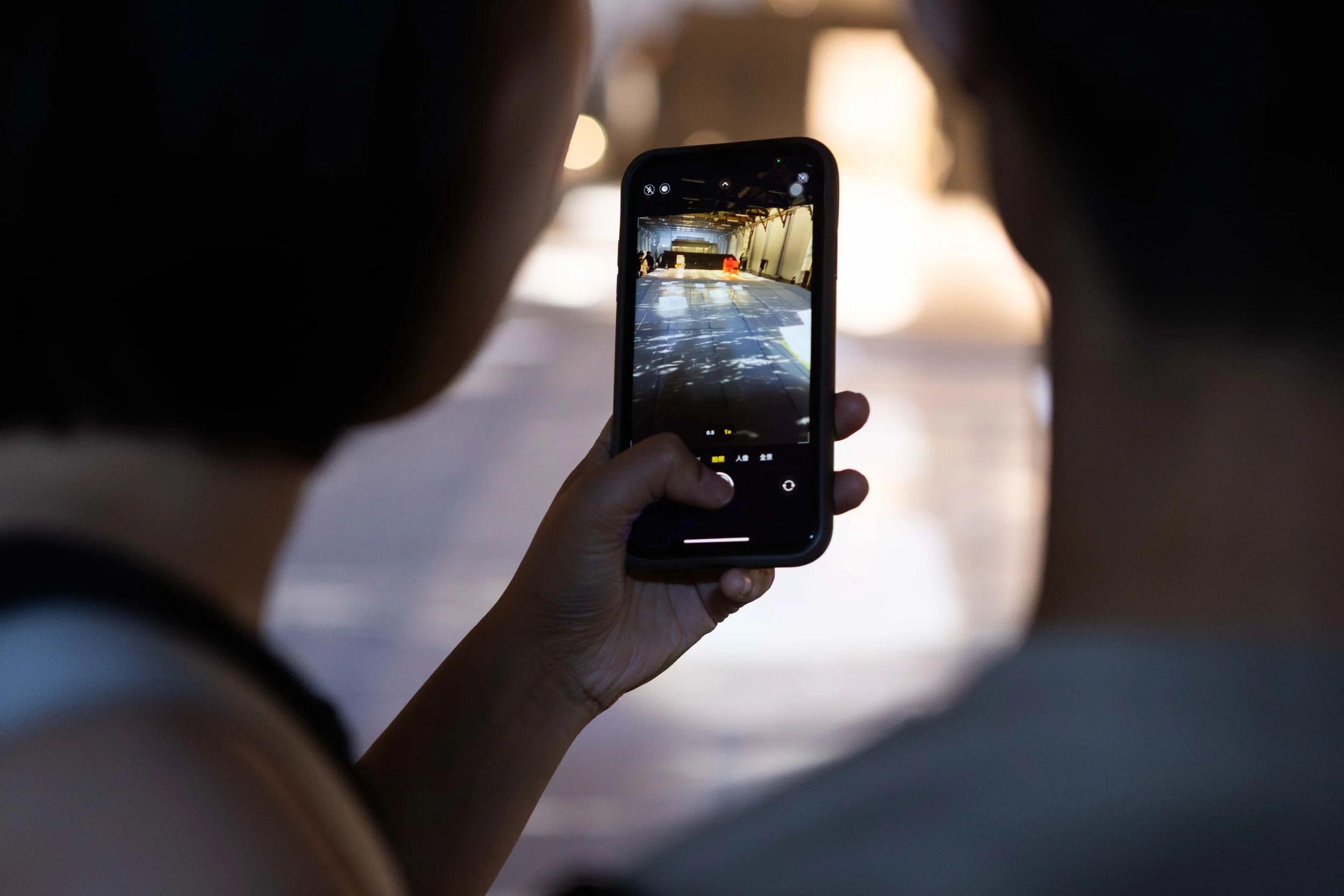
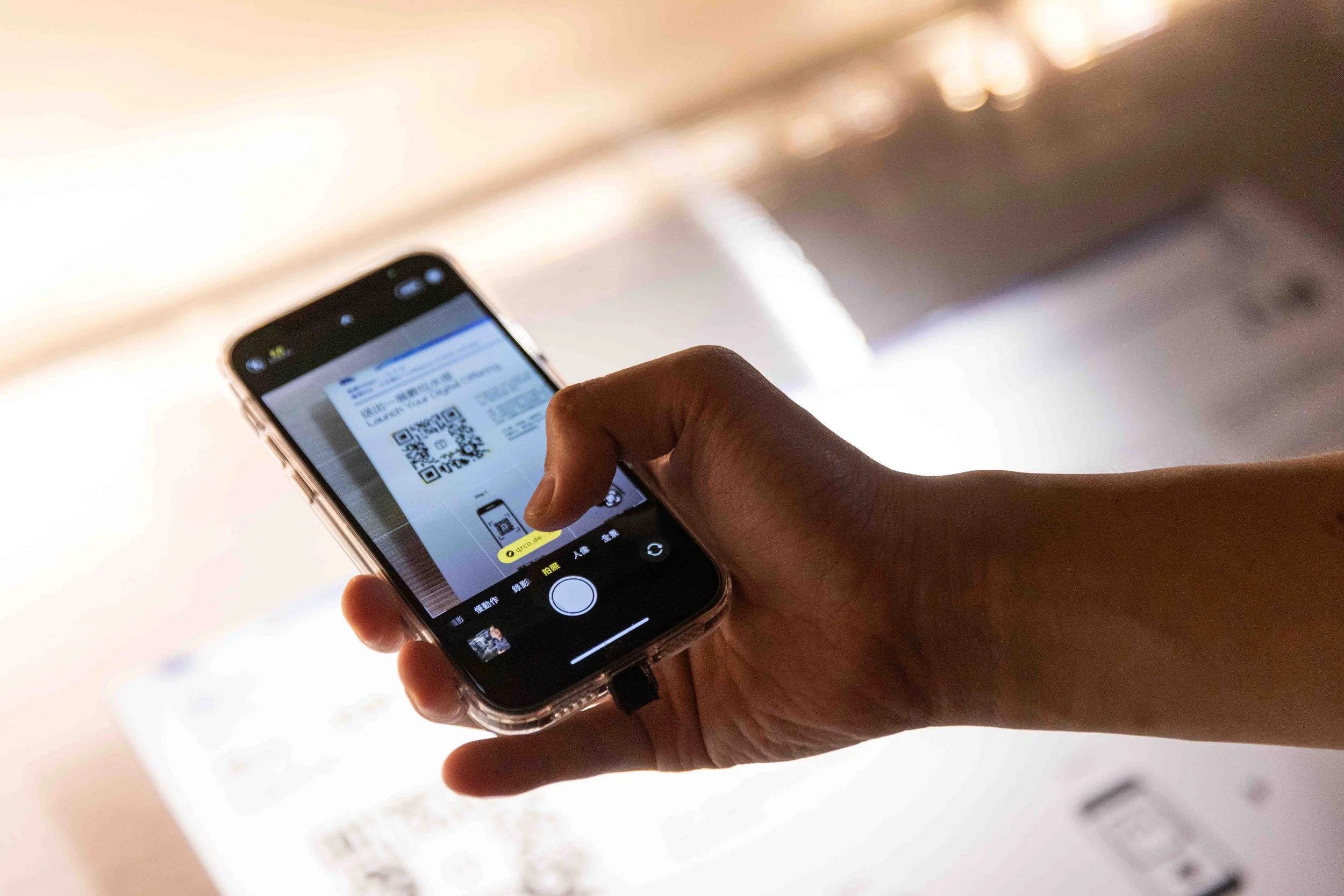
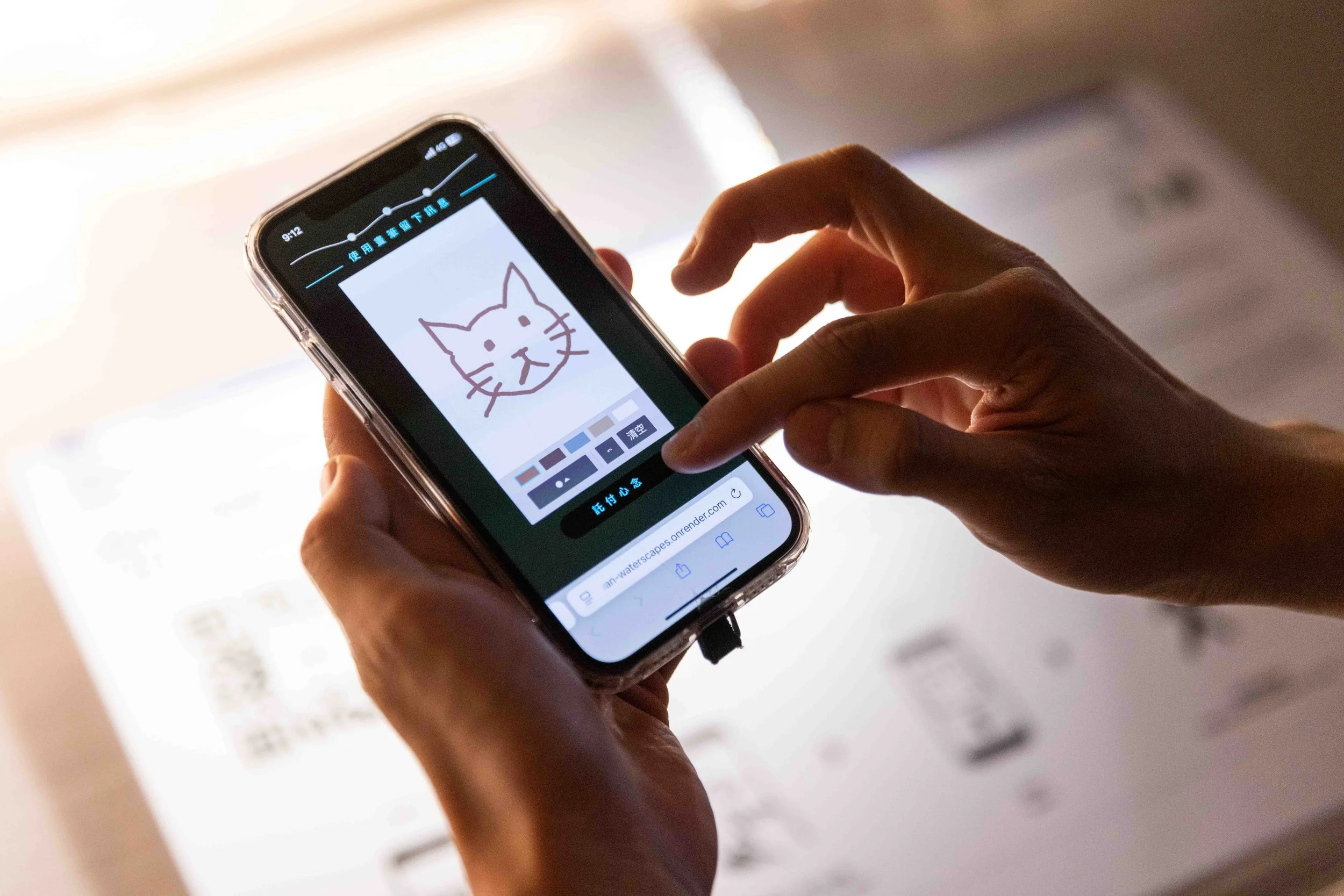
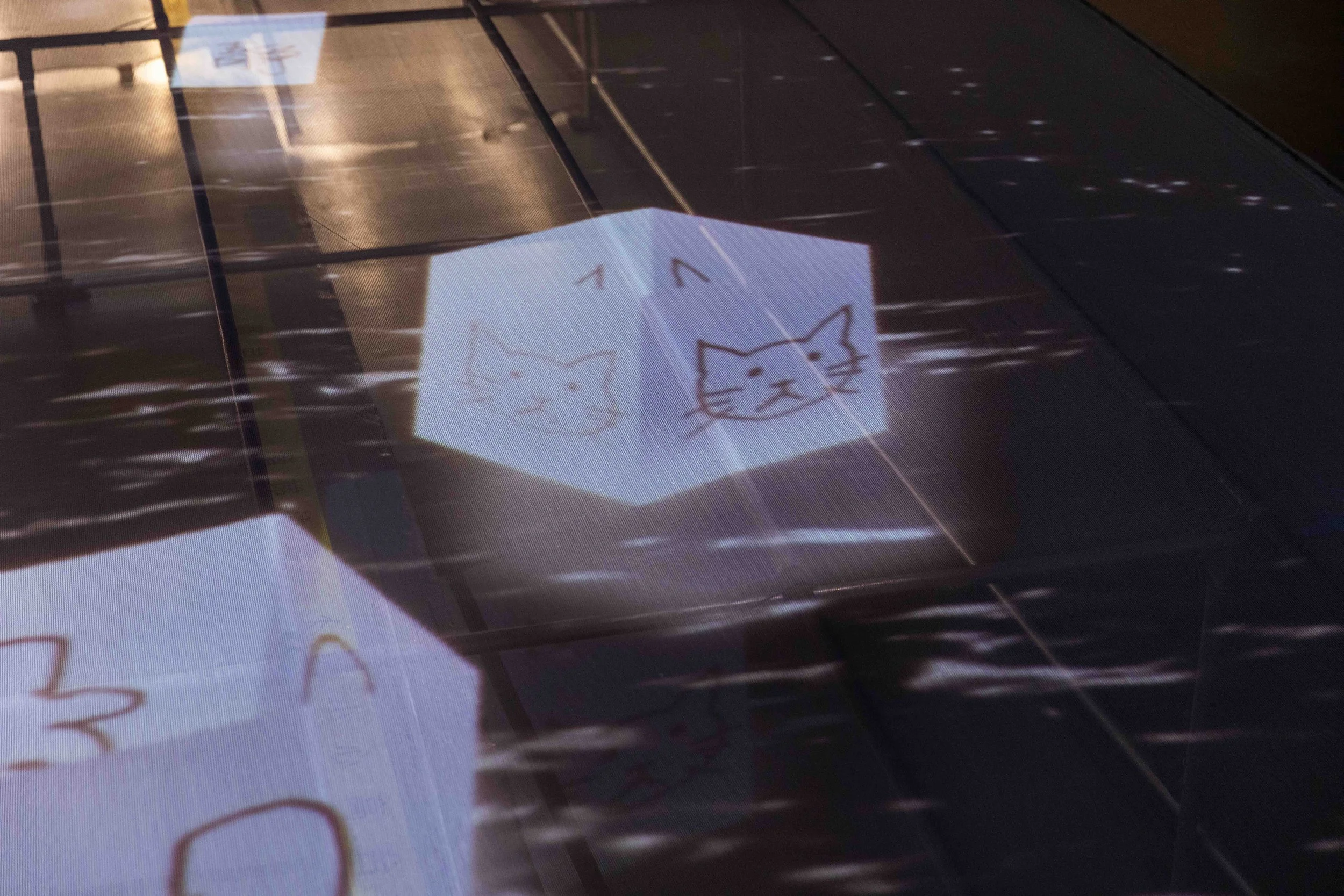
象徵出海口的位置,設有「水燈祭典互動區」邀請觀眾在展場中送出一盞數位水燈。
當動線繞過此區回望,會看見從代表聚落的那端飄來的水燈,心願或祝福匯聚成一條光的河流。閱讀他人留下的訊息時,角色也因觀看位置的轉換而悄然改變,從祈願者走入傾聽者的位置,帶入觀世音菩薩的視角,那位能看見聲音的神明,想像承接眾生的祈願是甚麼心情。
Material, Scale, and Atmosphere
The main platform is built with an agricultural greenhouse steel frame, forming a wave-like structure wrapped in translucent mesh and paper. Light and permeable, the materials recall the soft visual atmosphere of Taiwan’s rural landscapes. In traditional belief practices, paper is seen as a medium readily inhabited by spirit, echoing the exhibition’s focus on water.
Meshes of varying density serve as projection surfaces, allowing light to suggest the way water receives and reflects light. Projections merge with the undulating form, blurring edges through light and shadow. Images cast onto translucent layers reveal silhouettes behind them, making the presence of water appear suspended in space.
As the exhibition explores water beliefs, rituals, and legends, the presence of interactive technology is intentionally kept to a minimum. Technology does not seek attention. Instead, it supports the presence of spirit, lending the space a sense of mystery, immersion, and quiet ritual.
Spatial Sequence
Spirit of Water brings together Taiwan’s diverse memories and beliefs surrounding water through sound, film, artifacts, and subtle interactions. These works are embedded within an abstracted landscape of Taiwan, tracing a terrain from mountain streams to the sea.
Upon entering, visitors first encounter the highlands, then descend into an underworld river, moving through a layered environment shaped by the murmurs of gods and mortals. Along the way, segments of the platform evoke rivers, irrigation channels, and other water systems, presenting cultural narratives rooted in their environmental contexts.
At the symbolic river mouth, an interactive water-lantern ritual invites visitors to release a digital lantern.
As the circulation turns and one looks back, lanterns drift from the direction of human settlement. Wishes and blessings gather into a luminous river. While reading messages left by others, one’s position quietly shifts from the one who prays to the one who listens. The perspective recalls Guanyin, the bodhisattva said to perceive the sounds of the world, inviting reflection on what it means to receive the hopes of many.