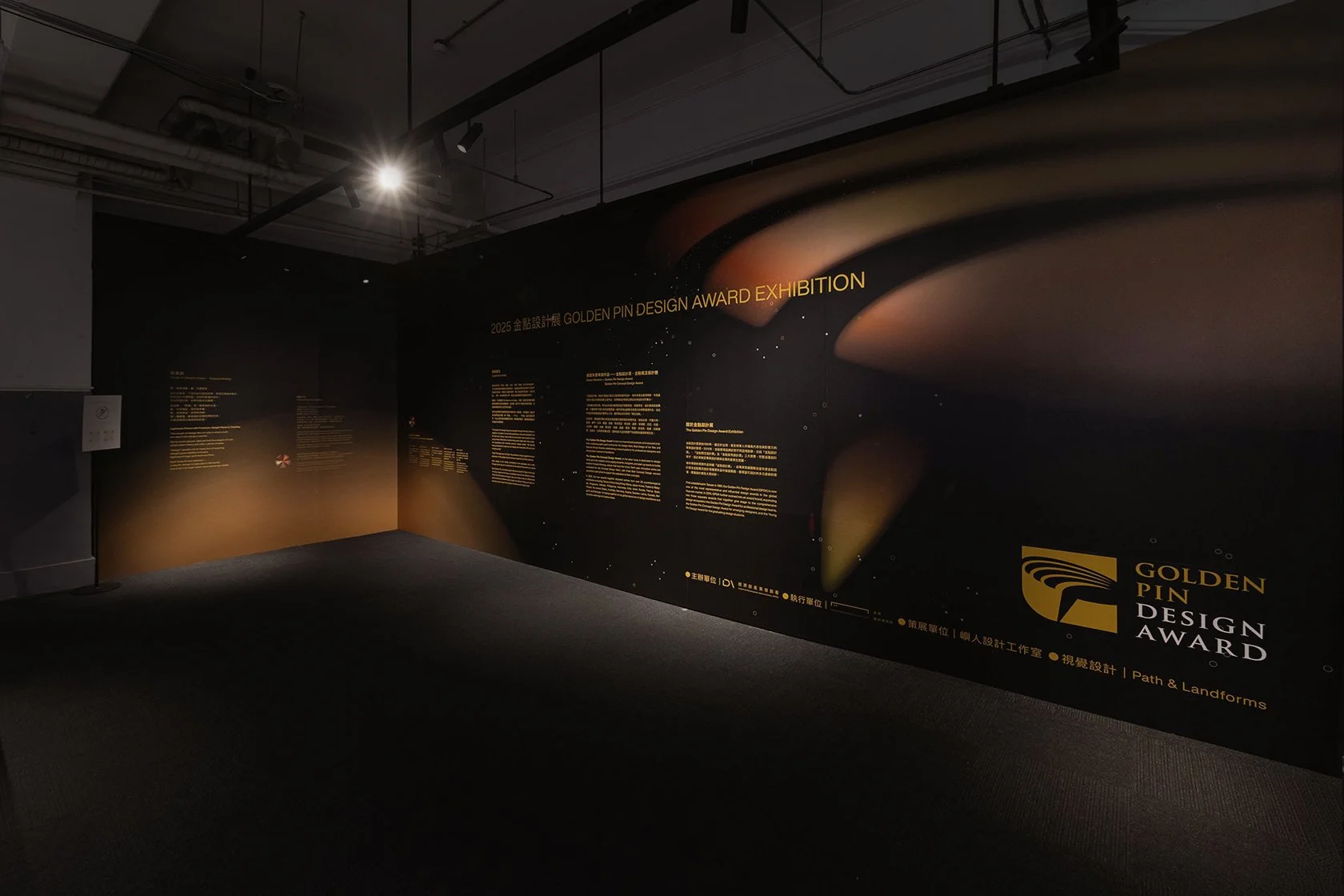
2025 Golden Pin Design Award Exhibition
金點設計展
The Spectrum of Scale
刻度群像
策展人|曾雅欣
策展單位|嶼人設計工作室
空間設計|曾雅欣、林中一 、王俞驊
設計助理|李偲妤
現場佈展|熊行英、許安琇、陳姿吟、陳壬齊
視覺設計|Path & Landforms
燈光設計|嶼人設計工作室
工務統籌|雲門工程
版面印刷|全印象數位影像
展場攝影|黑鳥音像
展覽類設計/ Exhibition design
松山文創園區, 台灣設計館 / Taipei, Taiwan
主辦單位|經濟部產業發展署
執行單位|台灣設計研究院 TDRI
合作單位|台灣設計館 TDRI
特別感謝|郭方瑜、極製設計所、SANAA Team
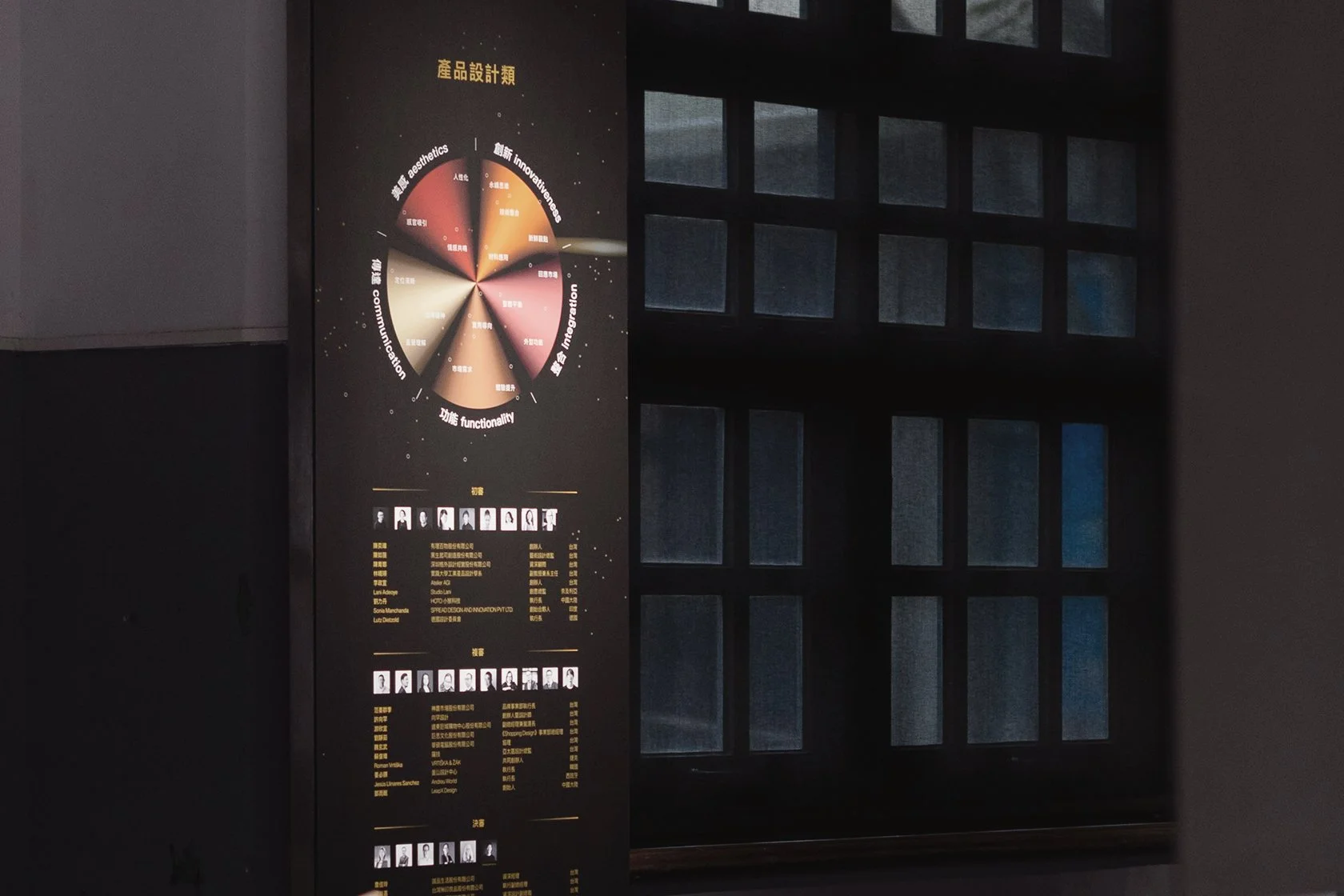
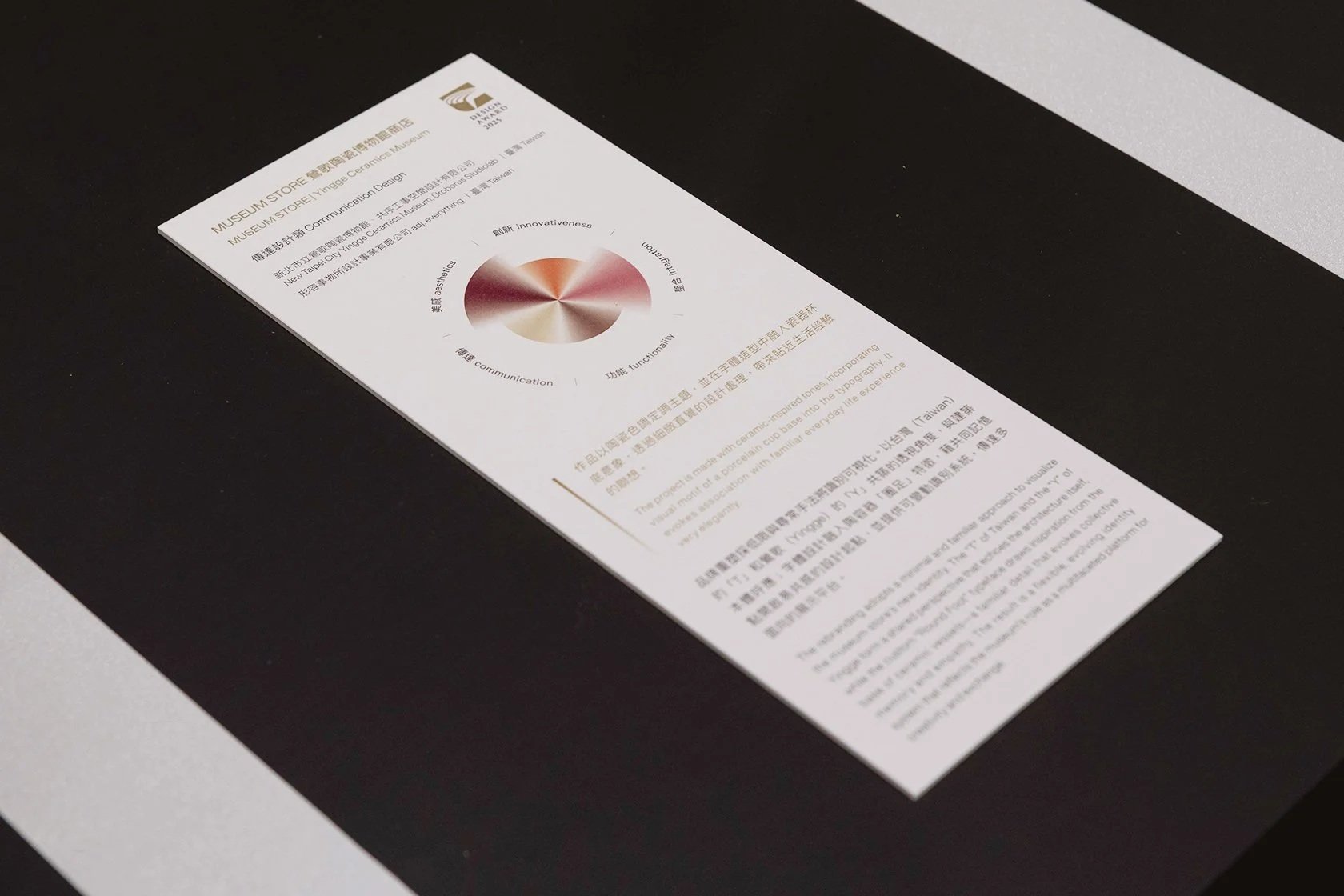
金點設計獎一直以來的都有「整合、創新、功能、美感、傳達」五項評審指標。
2025年首度邀請評審團在評選過程中,依據這些標準記錄每件作品在不同面向的表現,將評審的專業觀點,轉化為具體可感知的「設計刻度」。
然而,專業的判準,是否也能與觀眾的直覺感受對焦?
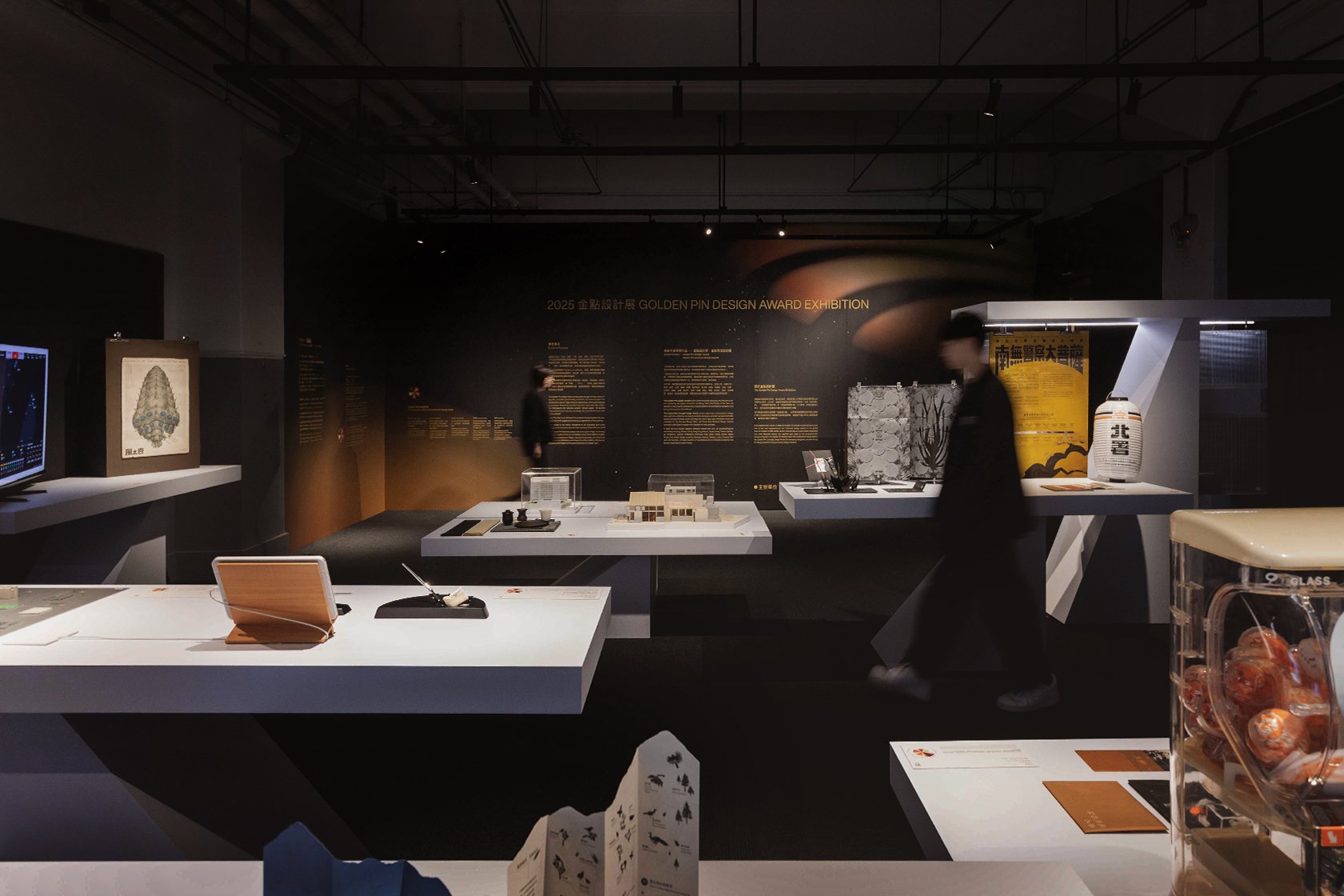
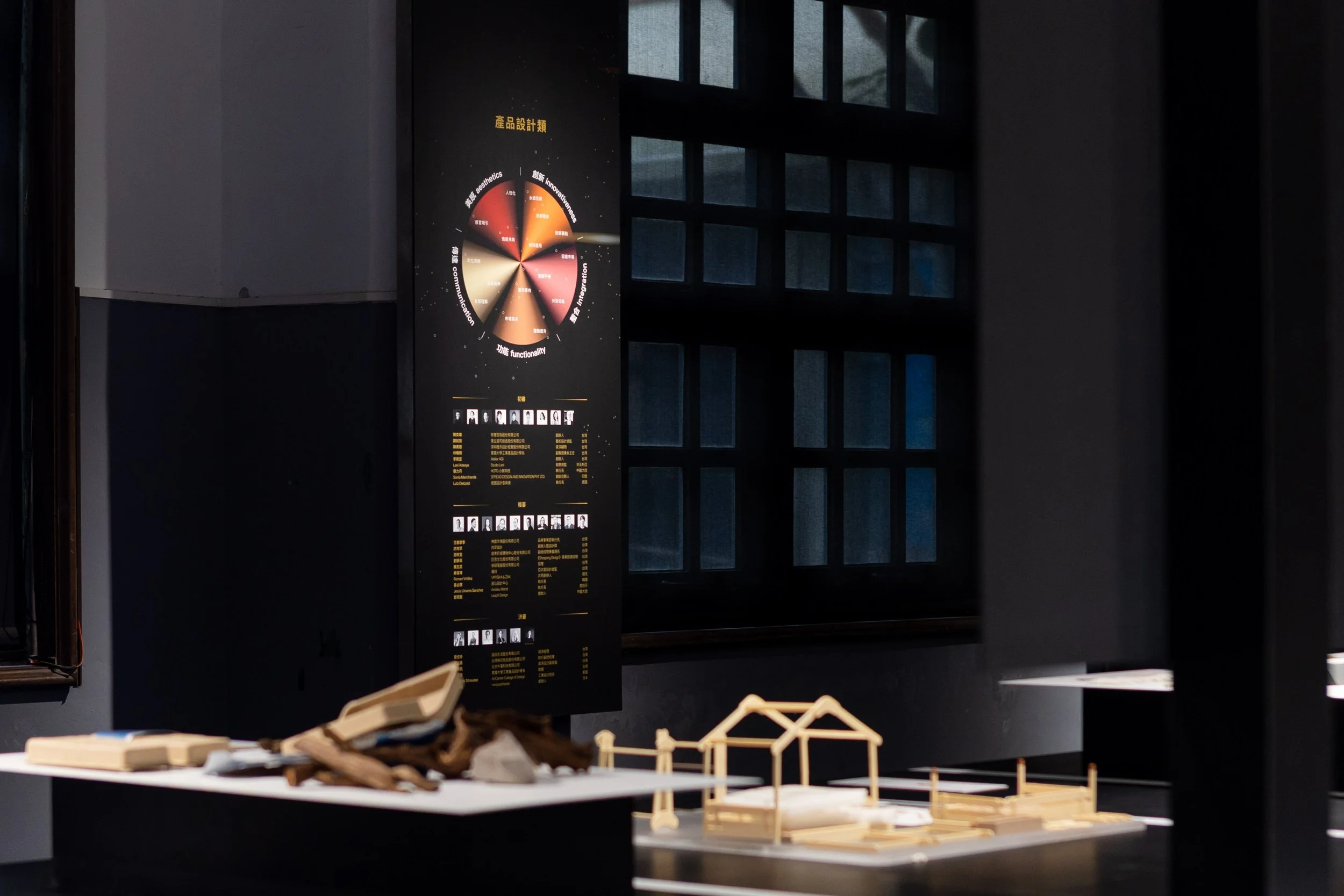
策展以「刻度群像 The Spectrum of Scale」 為題, 將評審的專業視角與觀眾的感知經驗對焦,把五項指標轉成可視化的刻度雷達圖,展場的每件作品說明卡上都有一張「特質雷達圖」表現評審的觀點。
除了呈現評審的「理性刻度」與觀眾溝通之外,設計團隊也以三種「直覺尺度」重新排列作品,希望在這裡,也能透過設計,「重新觀看」我們的生活世界,
因此本次金點設計展的三個館分別如下
輕重館(Scale of Weight)、
大小館(Scale of Presence)、
快慢館(Scale of Tempo)。
對比於評審的理性觀點,這三種分類屬於「感受性」的坐標,讓作品之間的差異與關聯自己浮現,有些互相呼應、有些形成對照、有些在同一條軸線上前後接力,讓我們能用更立體的方式,看見得獎作品的意義與份量。
專業與直覺,你站在光譜的哪裡?
The Golden Pin Design Award has long evaluated entries based on five criteria: Integration, Innovation, Function, Aesthetics, and Communication.
In 2025, for the first time, the jury was invited to record how each project responded to these five criteria during the evaluation process. Their professional observations were translated into visible design scales, turning expert judgment into something tangible.
This brings up a question: Can professional criteria align with the intuitive perception of the audience?
Titled The Spectrum of Scale, the exhibition seeks to connect the jury’s analytical perspective with the audience’s sensory experience. Each project label features a radar chart visualizing the five evaluation criteria and reflecting the jury’s assessment.
Beyond presenting these rational scales, the curatorial team also reorganized the works according to three intuitive categories. Through this arrangement, the exhibition invites visitors to look again at the world around us through design.
The three galleries are:
Scale of Weight, Scale of Presence, Scale of Tempo
In The Spectrum of Scale, professional judgment and intuitive perception are positioned along the same spectrum, creating space for multiple ways of reading design.
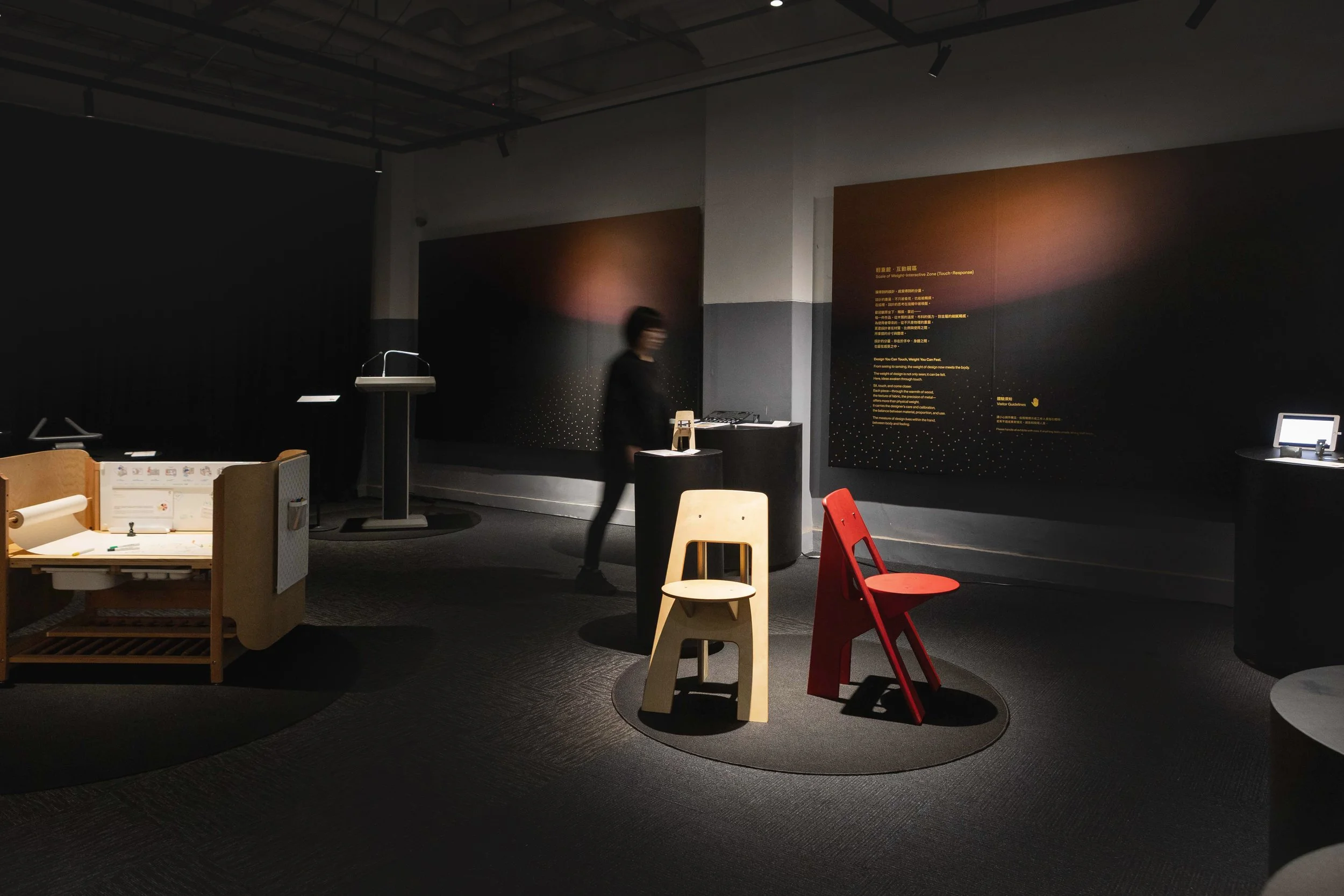
01 輕重館(Scale of Weight)
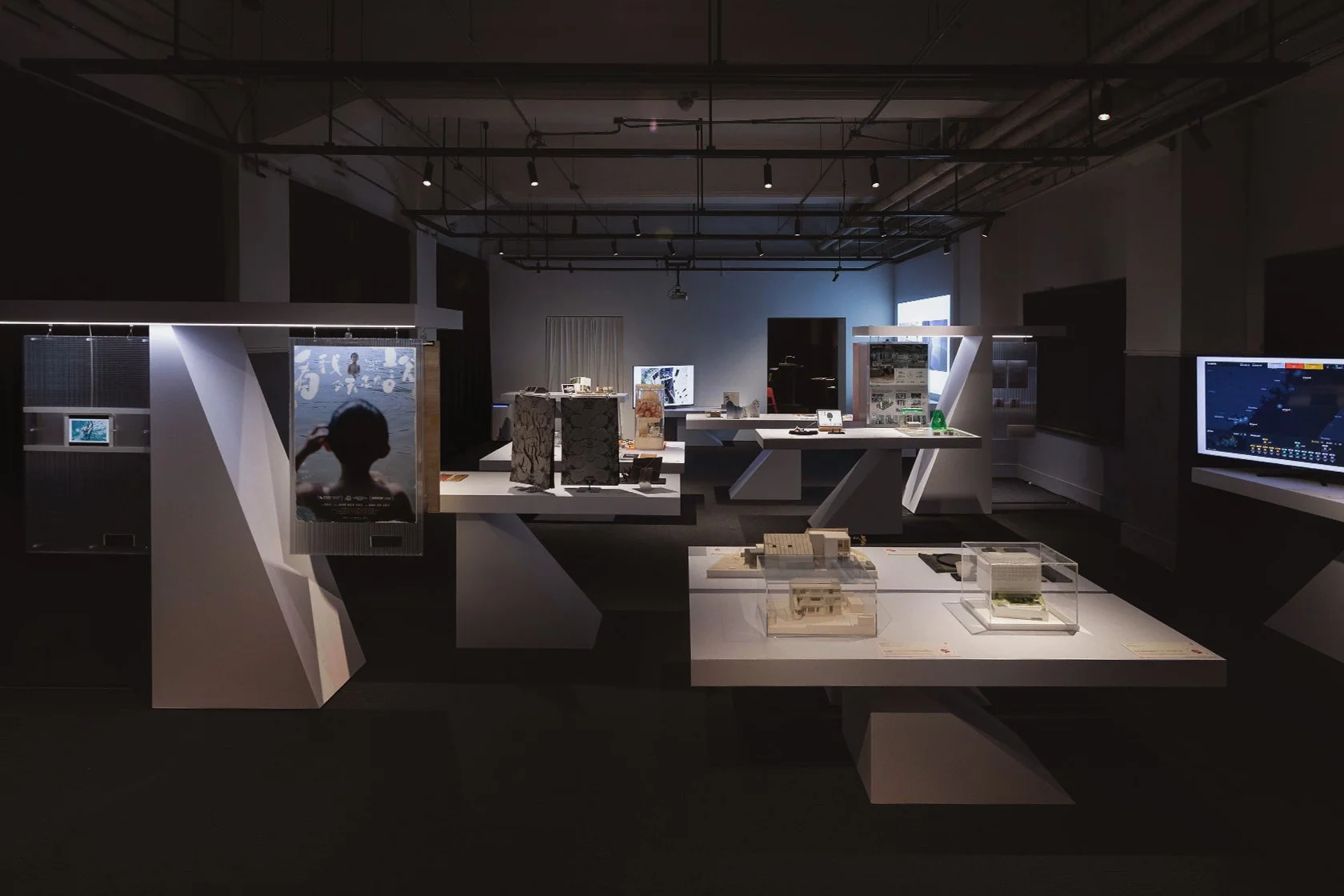
有些作品看起來輕盈,卻承載著深厚的信任;有些形體沉穩,卻帶來輕鬆自在的體驗。設計的「輕重」不只來自材質與結構的物理重量,也來自它所承擔的價值與責任,也就是「意義」的分量。每一種重量感,都是設計試圖回應世界的方式。
空間策略上,不同尺度與不同領域的設計被放置於等重的「天秤」展台之上。
對世界而言,設計所承載的意義並不隨尺度改變,因此在同一重量基準下呈現各自的「價值觀」。
01 Scale of Weight
Some works appear light yet carry deep trust; others feel solid yet create a sense of ease. The “weight” of design does not only come from material and structure, but also from the values and responsibilities it carries. It is a matter of meaning.
Each sense of weight reflects how design responds to the world.
Projects of different scales and disciplines are placed on equal-weight balance platforms. The meaning carried by design does not change with scale. By sharing the same weight baseline, each project presents its own position and values.
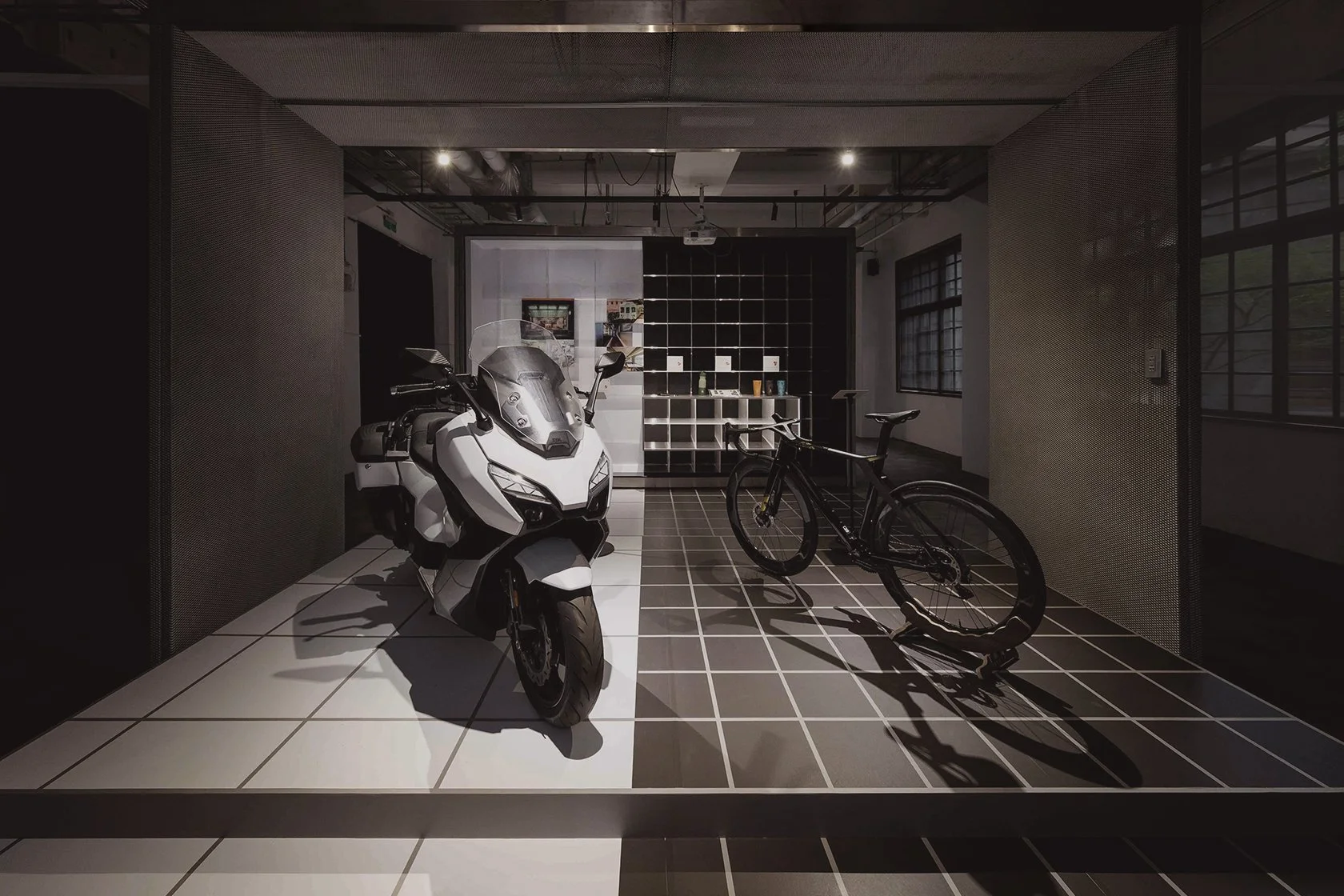
02 大小館(Scale of Presence)
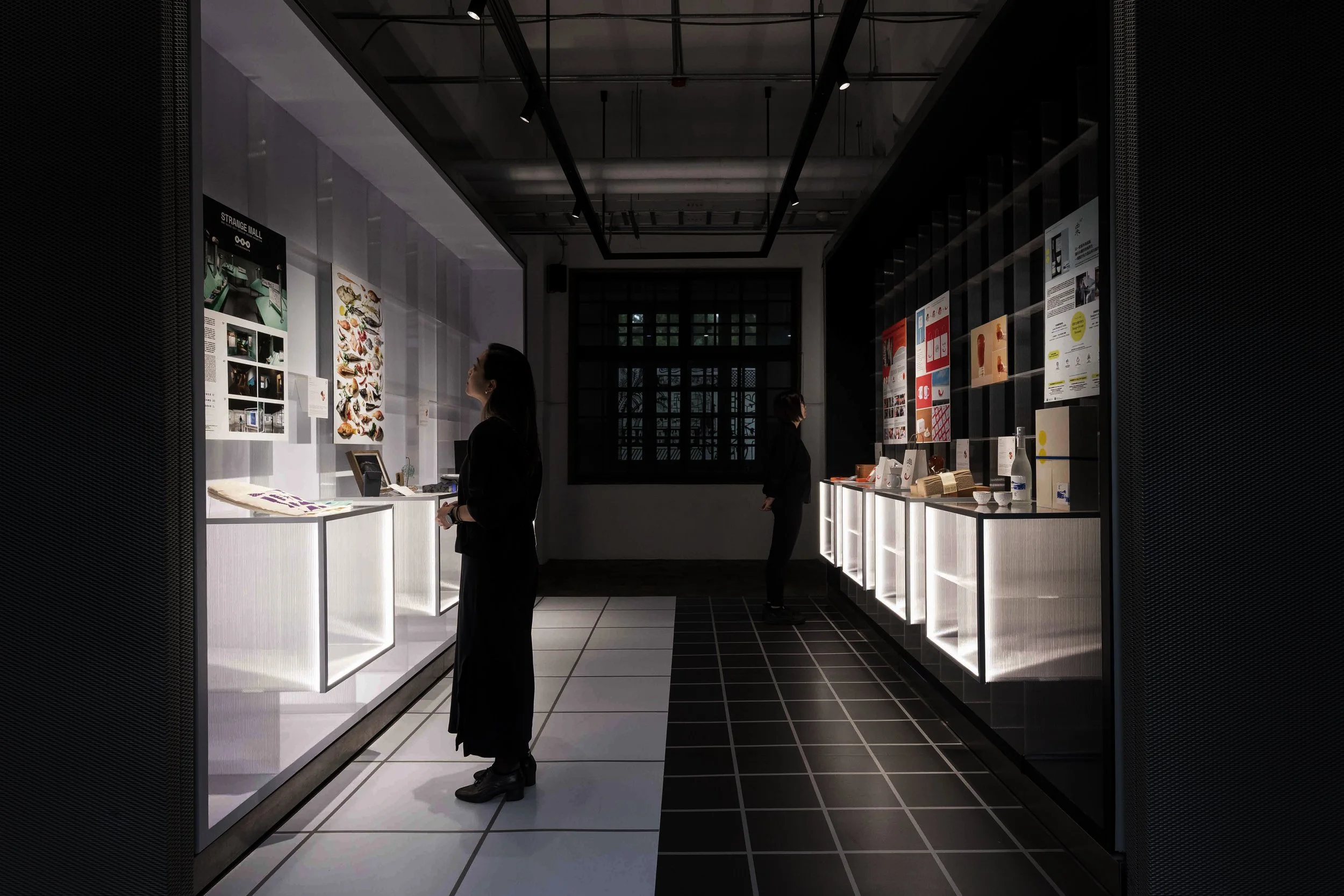
設計的形體固然有大或小,設計的存在感與影響力同樣存在尺度差異。從細節到場域,從個人到社會;小的改變生活的片刻,大的形塑城市與環境的樣貌。設計的存在以不同大小被感知。
可見的形體與心中迴盪的共鳴,共同構成設計的「存在感」。
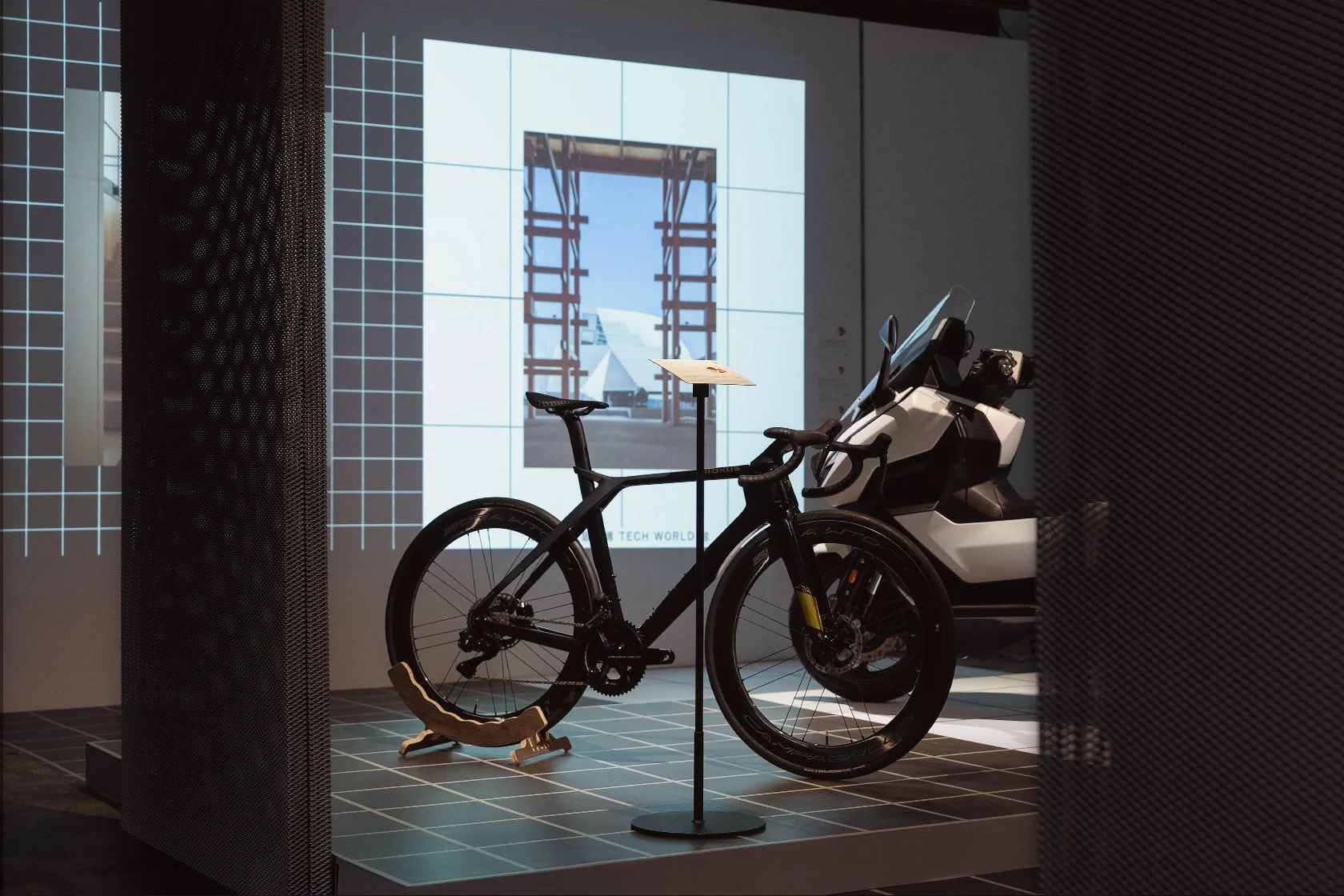
利用展館既有的框架,用打格子的視覺致敬設計師製圖用的方格紙,讓尺度差異更直覺。
02 Scale of Presence
Design has physical size, but it also has different levels of presence and impact. From details to environments, from individuals to society, small designs shape everyday moments, while larger ones shape cities and landscapes. Design is perceived at different scales.
Presence is formed by both visible form and the resonance it leaves behind.
Using the existing framework of the venue, the exhibition adopts a grid layout inspired by drafting paper, allowing differences in scale to be understood more directly.
03 快慢館(Scale of Tempo)
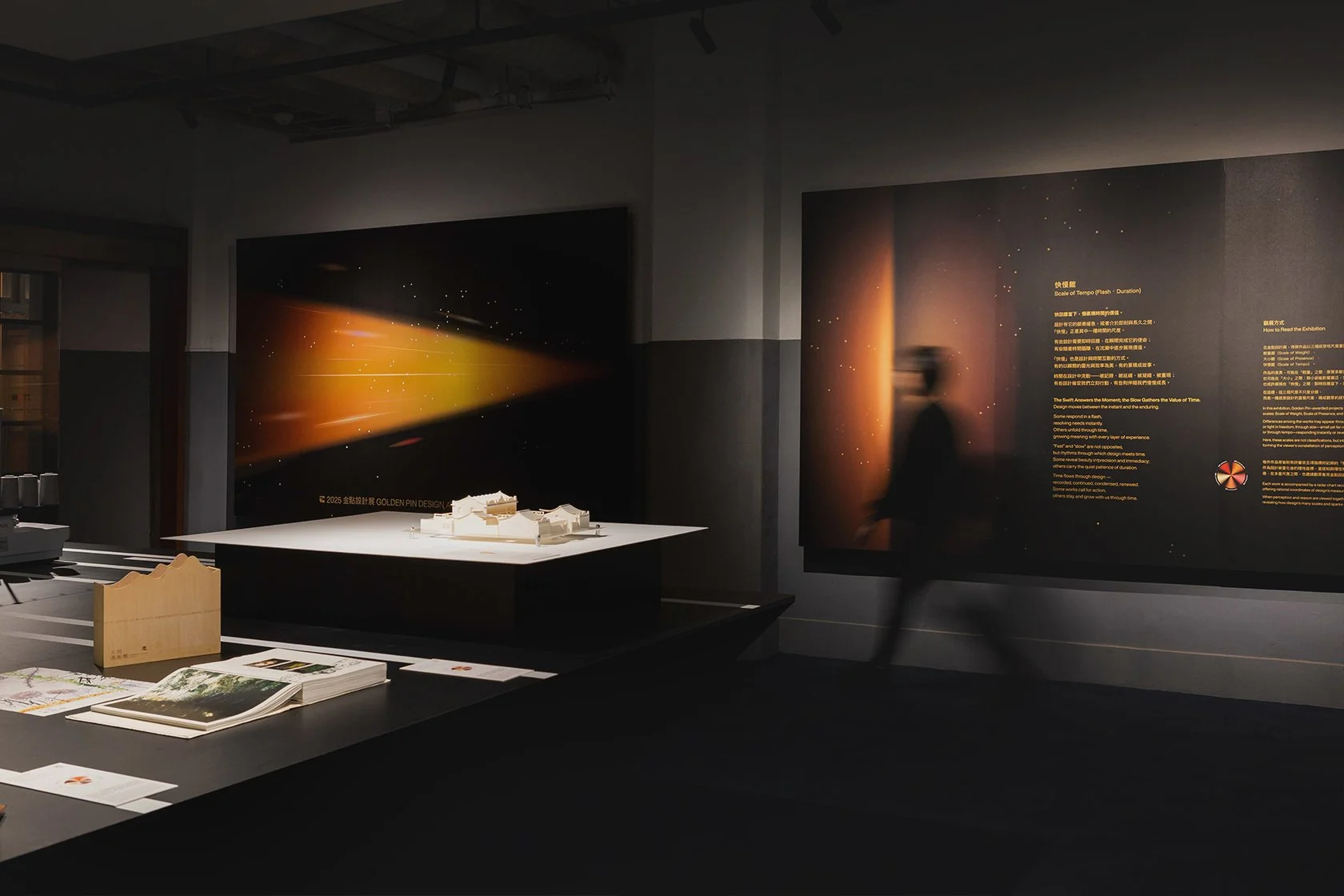
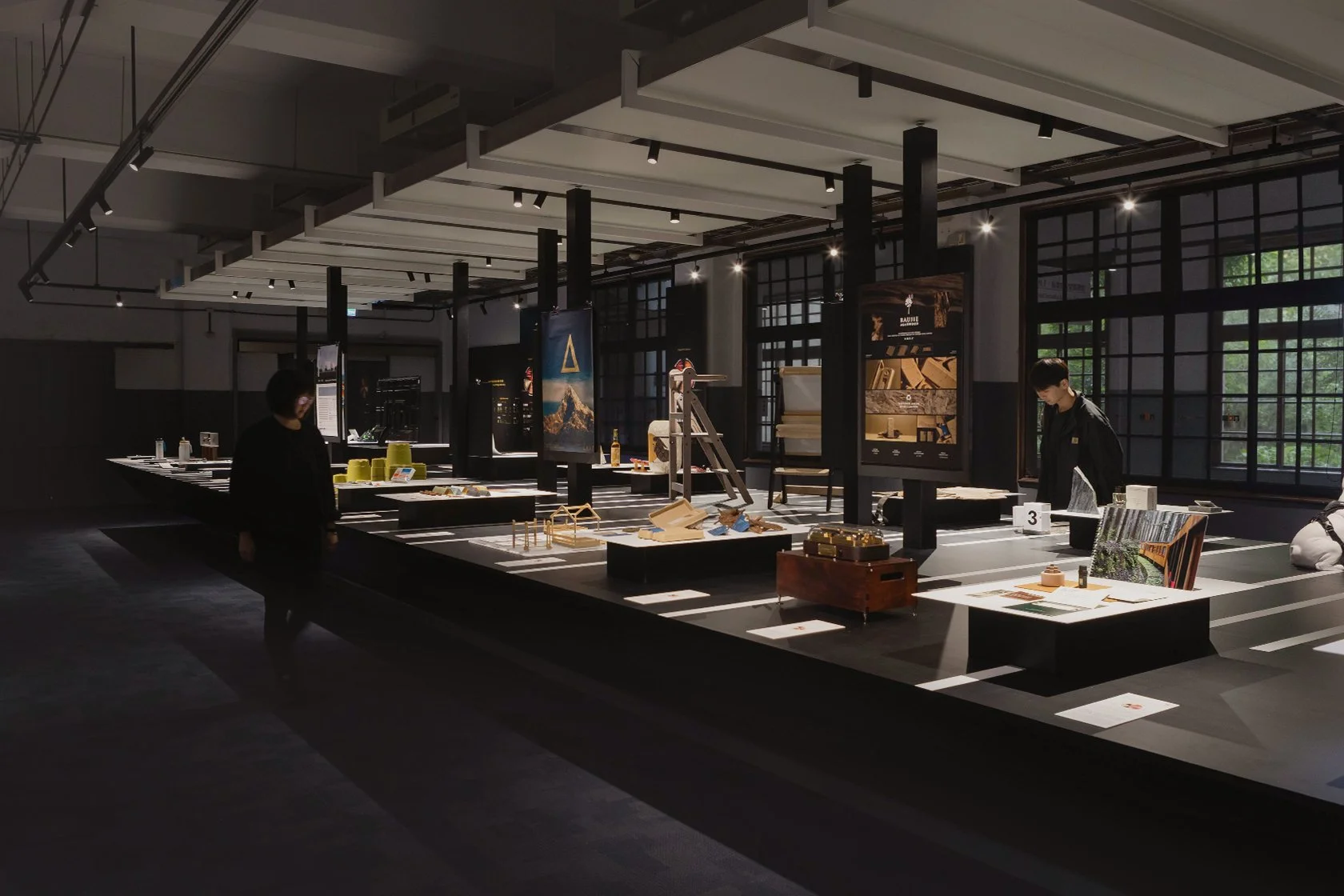
設計有它的節奏緩急。
有些設計需要即時回應,在瞬間完成它的使命;有些隨著時間醞釀,在沉澱中逐步展現價值;有的以瞬間的靈光與效率為特質,有的累積成故事,有些設計催促我們立刻行動,有些則伴隨我們慢慢成長。
展場大平台兩側走道以快到慢、慢到快雙時間軸交錯,呈現設計在生活中的「步調」,例如,城市、生態、產業文化需要慢慢累積,而工具技術永遠在加速。
03 Scale of Tempo
Design moves at different speeds. Some works respond immediately and fulfill their role in an instant; others develop over time and gradually reveal their value. Some emphasize efficiency and immediacy, while others accumulate into stories.
Some designs call for immediate action, while others stay with us and grow over time. The two sides of the main platform form crossing time axes, from fast to slow and slow to fast, presenting the different tempos of design in daily life. Cities, ecologies, and cultural systems require time to accumulate, while tools and technologies continue to accelerate.